Why Do Tides Rise and Fall?
Understanding the phenomenon of tides is essential for comprehending various aspects of oceanography and marine biology. The rise and fall of sea levels are caused by a complex interplay of gravitational forces from celestial bodies, primarily the Moon and Sun, as well as Earth's rotation.
TL;DR
- Gravitational Pull: Tidal movements are mainly driven by the gravitational pull exerted by the Moon on Earth.
- Ocean Dynamics: The Earth rotates faster than the Moon orbits around it, causing tidal bulges to form along the direction of its movement.
- Sun’s Influence: Although weaker compared to the Moon, the Sun also exerts a gravitational force that affects tides, particularly during spring and neap tide cycles.
- Moon Phases: Different phases of the Moon influence the intensity and timing of high and low tides.
- Geographical Variability: Coastal regions experience varying tidal ranges based on geographical features such as bays, estuaries, and ocean depths.
Gravitational Forces Driving Tidal Movements
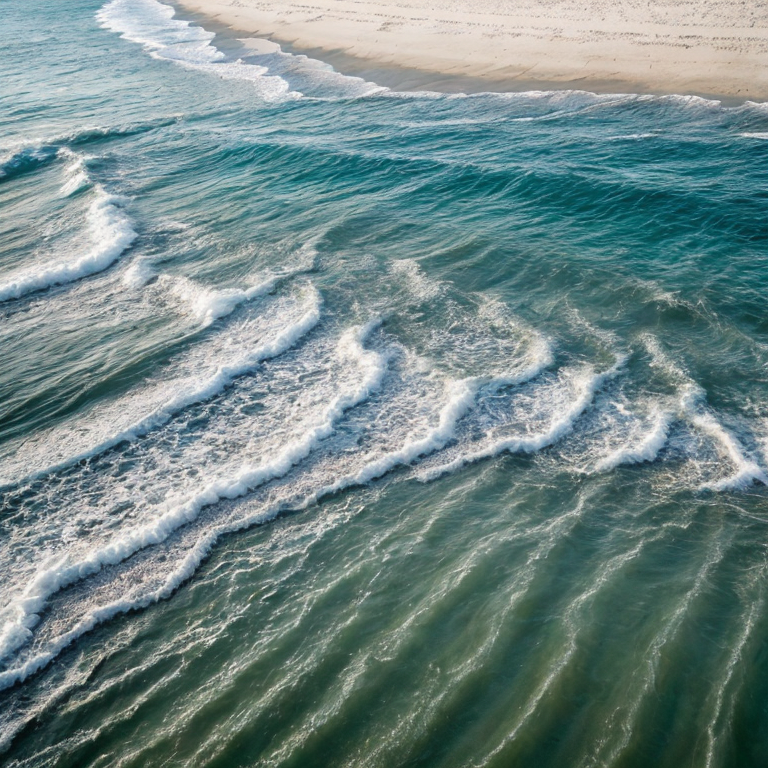
The primary cause of rising and falling sea levels is the gravitational interaction between celestial bodies. The Moon's gravitational pull is the strongest influence due to its proximity to Earth, while the Sun also plays a significant role but with less intensity because it is much farther away.
Lunar Influence on Tides
- Gravitational Pull: The Moon exerts a strong gravitational force on Earth’s oceans and atmosphere. This gravitational attraction causes water masses to bulge out towards the Moon.
- Tidal Bulges: As Earth rotates, different parts of its surface move into the positions where these tidal bulges are formed. This results in periodic rises and falls of sea levels.
Solar Influence on Tides
- Relative Weakness: Although the Sun is much larger than the Moon, it is also significantly farther away from Earth, making its gravitational effect less influential.
- Combined Effects: During certain phases (new moon and full moon), when both the Sun and Moon align in line with Earth, their combined gravitational pull intensifies tides, leading to spring tides. Conversely, during quarter moons, when the Sun and Moon are at right angles relative to Earth, their forces partially cancel out each other, resulting in neap tides.
Historical Context of Tidal Studies

The study of tides has a rich history dating back thousands of years with early observations and theories evolving into modern scientific understanding.
Ancient Observations
- Early Records: Ancient civilizations such as the Babylonians and Greeks kept detailed records of tidal patterns, recognizing their impact on maritime activities.
- Aristotle’s Theory: Aristotle proposed that tides were caused by the rising and falling of water levels due to changes in air pressure.
Scientific Revolution
- Newtonian Mechanics: Sir Isaac Newton's laws of universal gravitation provided a scientific explanation for why tides occur. He showed that gravitational forces from celestial bodies could explain tidal movements.
- Euler’s Work: Leonhard Euler further refined the understanding by introducing mathematical models to describe how ocean water responds to these forces.
Modern Era
- Computational Models: Advanced computational techniques and satellite data have enabled scientists to predict tides with high accuracy, incorporating factors like Earth's rotation, ocean currents, and coastal topography.
- Global Tidal Charts: Comprehensive charts detailing tidal patterns across the globe are now available, aiding navigation and marine activities.
Etymology and Cultural Significance
The word "tide" has a deep etymological background rooted in Old English and Norse languages. Over time, it has become deeply embedded in various cultures around the world.
Linguistic Origins
- Old English: The term “tid” meant “time,” reflecting early perceptions of tides as regular occurrences tied to time.
- Norse Influence: Scandinavian sailors used terms like "tide" and "stream," emphasizing their practical importance for navigation.
Cultural Impact
- Maritime Traditions: Coastal communities have developed extensive knowledge about local tidal patterns, which are crucial for fishing, shipping, and coastal protection.
- Literature and Art: Tides often feature prominently in literature and art, symbolizing time’s passage or the cyclical nature of life.
Misconceptions About Tidal Movements
Despite widespread understanding, several misconceptions persist regarding the mechanisms behind tides.
Common Myths
- Atmospheric Pressure: Some believe that atmospheric pressure changes are responsible for tidal movements. While atmospheric conditions can affect sea levels temporarily (e.g., storm surges), they do not cause regular tidal patterns.
- Earth’s Shape Changes: There is a misconception that the Earth's shape physically deforms under lunar gravity, causing tides. In reality, only water masses respond to gravitational forces.
Scientific Clarification
- Primary Influence: The Moon’s gravitational pull remains the primary driver of tides, with additional influences from the Sun and Earth’s rotation contributing to complex tidal patterns.
- Conservation of Water: Despite rising and falling waters, the total volume of water in the oceans remains constant. Tidal movements redistribute this water across different coastal areas.
Geographical Variability in Tidal Patterns
Coastal regions experience highly variable tidal ranges due to geographical features such as bays, estuaries, and ocean depths.
Coastal Features
- Bays and Estuaries: These funnel-shaped bodies of water amplify the effects of tides, leading to higher tidal ranges.
- Ocean Depth: Shallow coastal areas exhibit more pronounced tidal changes compared to deeper parts of the ocean.
Global Tidal Patterns
- Equatorial Regions: Near the equator, tidal ranges are generally smaller due to the Moon's perpendicular alignment with Earth’s rotational axis here.
- Arctic and Antarctic Coasts: Extreme latitudes often experience semi-diurnal tides (two high and two low tides per day), while many other areas see diurnal patterns (one high and one low tide per day).
Practical Applications
- Navigation: Understanding tidal patterns is crucial for safe maritime navigation, especially in shallow waters where sudden changes can pose hazards.
- Renewable Energy: Tidal power generation relies on predictable tidal cycles to harness energy efficiently.
Conclusion
The rise and fall of tides are a result of complex gravitational interactions between Earth, the Moon, and the Sun. While the primary driver is the Moon’s gravitational pull, solar forces also play a significant role, especially during specific lunar phases like new and full moons. Historical studies have provided foundational knowledge, while modern science offers precise predictions through computational models. Tidal patterns vary widely across different geographical locations due to coastal features and ocean depths, making them essential for navigation, renewable energy projects, and marine conservation efforts.