Why Do Ocean Tides Rise and Fall?
Ocean tides are a fascinating natural phenomenon that have puzzled humans for centuries. The rhythmic rise and fall of the sea's surface is driven by complex gravitational interactions between celestial bodies. Understanding why ocean tides occur involves delving into the forces exerted by the moon, sun, and Earth itself.
TL;DR:
- Ocean tides are primarily caused by the gravitational pull from the Moon.
- The Sun also influences tidal movements but to a lesser extent than the Moon.
- Tidal patterns can vary based on the relative positions of celestial bodies.
- Understanding tides is crucial for navigation, coastal management, and marine biology.
Gravitational Forces Driving Ocean Tides

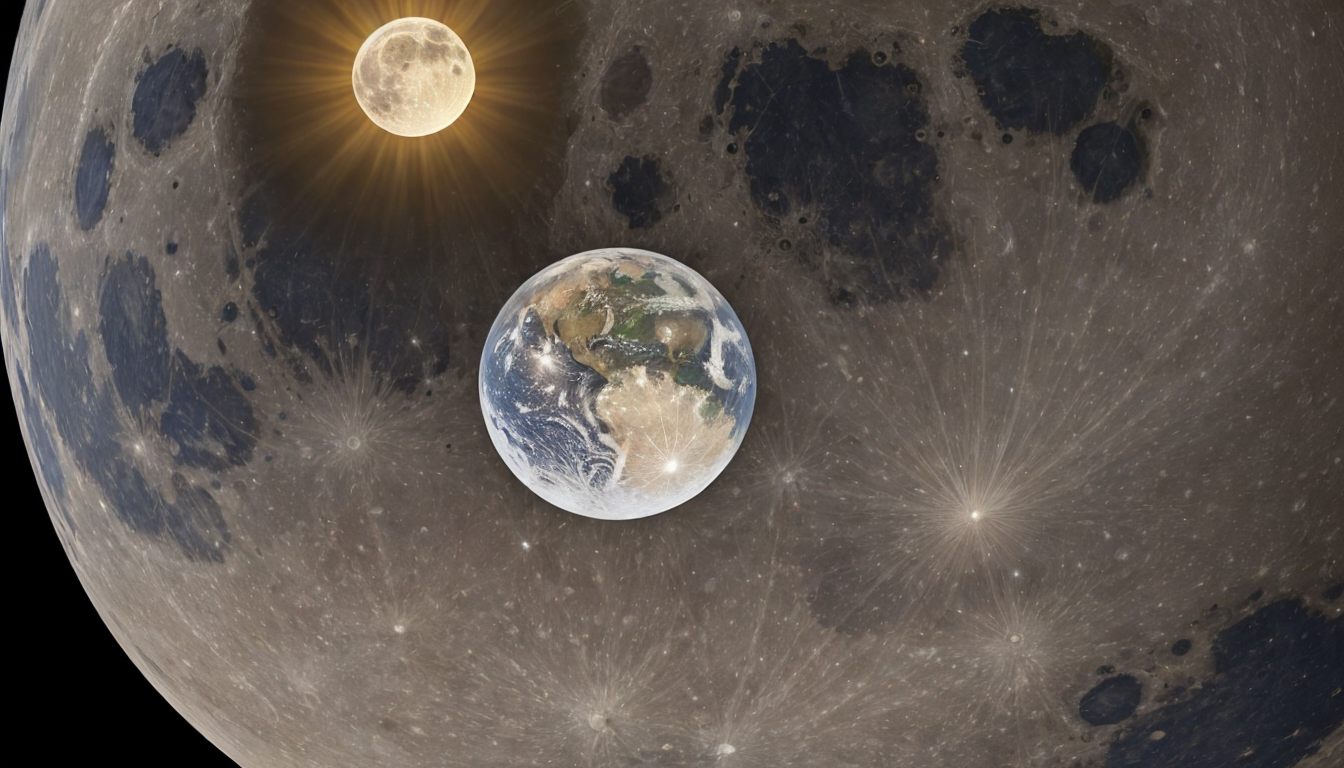
The primary force responsible for ocean tides is gravitational attraction. The Earth rotates beneath the moon, causing the side facing the moon to experience a stronger pull than the opposite side. This difference in gravitational strength creates two bulges of water on either side of the planet: one directly under the Moon and another on the opposite side.
Gravitational Pull from the Moon
The Moon's gravity pulls more strongly on the side of Earth that faces it, creating a tidal bulge there. On the opposite side of the Earth, inertia causes an equal but opposing gravitational effect, resulting in another tidal bulge. These two bulges represent high tides.
Gravitational Influence from the Sun
Although the Moon's gravity is significantly stronger than that of the Sun due to its proximity, the Sun still exerts a gravitational influence on Earth and contributes to the overall tidal pattern. The Sun's effect is about half as strong as the Moon’s at any given time, but during certain phases (like new or full moon), when both celestial bodies are aligned with the Earth, their combined forces can amplify tides.
Combined Effects of Sun and Moon
When the gravitational forces from the Sun and Moon align—during new moons and full moons—their combined pull results in higher high tides and lower low tides. These periods are known as spring tides. Conversely, when the Sun and Moon form a 90-degree angle relative to Earth (at first or third quarter moon), their tidal forces partially cancel each other out, leading to smaller tidal ranges called neap tides.
Historical Understanding of Tidal Movements

The concept that the Moon affects ocean levels has been observed since ancient times. Early civilizations noted regular patterns in sea level changes and correlated these with lunar phases. However, it wasn't until the Scientific Revolution that scientists began to understand the mechanics behind tidal movements.
Ancient Observations
Ancient cultures around the world recognized the cyclical nature of tides and incorporated them into their calendars and rituals. For example, Babylonian astronomers recorded regular cycles in tide patterns as early as 400 BCE.
Newton's Laws of Motion
Sir Isaac Newton’s work on universal gravitation provided a theoretical framework for understanding tidal forces. In his seminal book "Philosophiæ Naturalis Principia Mathematica" published in 1687, Newton explained that the gravitational pull exerted by celestial bodies causes tides.
Modern Studies and Research
In the late 19th century, Sir William Thomson (Lord Kelvin) developed mathematical models to predict tidal patterns. His work laid the groundwork for modern tide prediction methods used today. Contemporary oceanographers continue to refine these models using advanced computational techniques and satellite data.
Etymology and Cultural Significance of Tides
The term "tide" comes from Old English, derived from words meaning “to flow” or “ebb.” The concept has deep roots in various cultures, often linked with seasonal cycles, lunar phases, and religious practices.
Etymological Roots
The word "tide" is rooted in Middle English, where it was used to describe the periodic rise and fall of water levels. Its linguistic origins trace back further to Old Norse and Anglo-Saxon languages.
Cultural Significance
Tidal patterns have long been intertwined with human culture. Ancient civilizations marked lunar cycles for religious ceremonies and agricultural activities. For instance, the Chinese calendar is based largely on the phases of the Moon, which directly influences tidal patterns.
Misconceptions About Tides
Despite extensive scientific research, several misconceptions persist regarding the causes and effects of tides.
Common Myths
- Magnetic Influence: Some believe that Earth's magnetic field plays a significant role in creating ocean tides. However, this is incorrect; tides are primarily due to gravitational forces.
- Earth’s Shape: There is a misconception that Earth’s sphericity affects tidal patterns more than celestial bodies do. In reality, the Moon and Sun dominate tidal dynamics through their gravitational pull.
Scientifically Supported Claims
- Gravitational Pull: The primary driver of tides is indeed the gravitational attraction between the Earth and other celestial bodies.
- Relative Positions: Tidal ranges depend heavily on the relative positions of the Earth, Moon, and Sun during different lunar phases.
Conclusion: Understanding Ocean Tides
In summary, ocean tides are a result of complex gravitational interactions primarily driven by the Moon's pull. The Sun also influences tidal patterns but to a lesser extent. Historical observations and modern scientific research have greatly enhanced our understanding of these natural phenomena. Recognizing the importance of accurate tide predictions is crucial for navigation, coastal management, and marine biology. By studying tides, we gain insights into Earth’s dynamic relationship with its celestial neighbors.
Understanding ocean tides helps us appreciate both their beauty and their practical significance in our daily lives and broader environmental contexts.