
Why Owls Twist Their Necks to Extremes?
Imagine a silent predator with haunting eyes, perched atop an old oak tree. Its head pivots unnaturally, watching the world from every angle, as if searching for something—or someone—that haunts its dreams and nightmares alike.
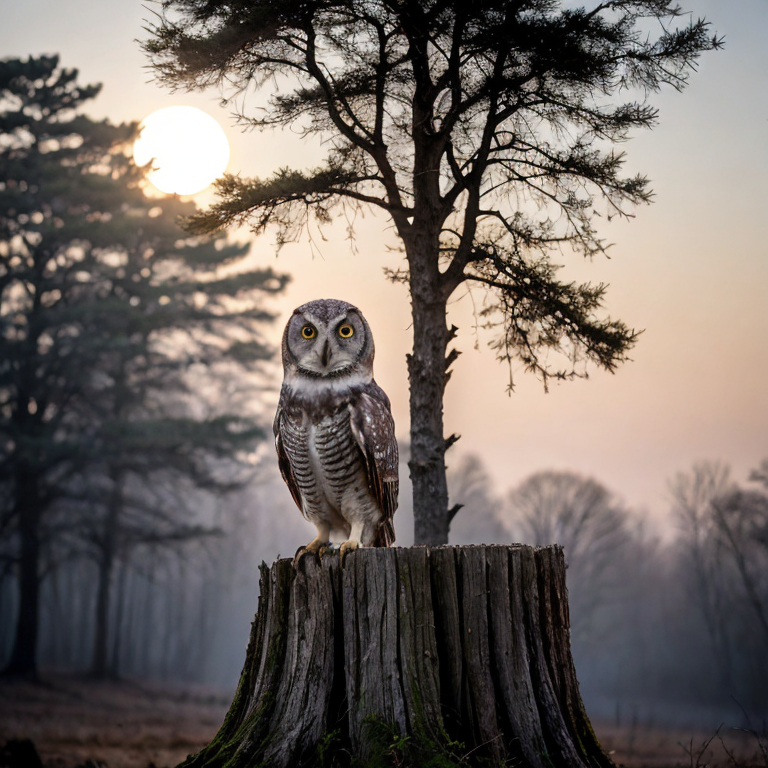
TL;DR: Key Points on Why Owls Rotate Their Necks So Far
- Anatomical Adaptations: Unique bone structure allows extreme flexibility.
- Vascular Networks: Special blood vessels ensure steady brain supply during rotation.
- Survival Tactics: Maximizes vision to spot prey in all directions.
- Camouflage Breakdowns: Rotating head minimizes movement, aiding in stealth.
The Anatomy of Owl Necks: An Engineering Marvel
Owls are nature’s supreme acrobats. Their neck anatomy is a testament to evolutionary prowess, allowing them to rotate their heads up to 270 degrees in either direction—a flexibility that baffles the human eye and often raises more questions than answers.

Bone Structure: The vertebrae in an owl's neck have evolved to become lightweight yet sturdy. They are elongated with large gaps between each segment, which act as joints for extreme movement. Lore Breadcrumb: Hollow Pines, where ancient trees seem to whisper secrets of the forest’s inhabitants, including these silent hunters.
Blood Supply: A network of arteries and veins ensures a constant blood supply during head turns. This includes an intricate web of small blood vessels that compensate when the larger vertebral artery is compressed during rotation. These adaptations protect against brain damage due to insufficient oxygen—a fascinating detail in owl biology. Lore Breadcrumb: The Ashen Gospel hints at passages describing fluid dynamics in mystical terms, paralleling the science behind these owls’ survival strategies.
Rotational Capabilities and Their Importance
Owls rely on this extraordinary ability for more than just watching birds and squirrels. It's a critical component of their hunting strategy, enabling them to spot prey without giving away their position.
Enhanced Vision: Owls have forward-facing eyes, much like humans, but unlike us, they can turn their heads in ways that maximize visual coverage while minimizing movement. This allows them to observe the world with an almost 360-degree field of view, though it's not a full circle as often misreported.
Stealth Hunting: The ability to rotate the head minimally without moving the body is crucial for maintaining camouflage and surprising prey effectively. Reader Confession: "Once I thought I saw one watching me through my window—then realized it was just a flicker of light playing tricks on my mind."
Comparative Animal Mobility Studies
Comparing owl necks to other birds reveals why this adaptation stands out. Most birds cannot turn their heads as far because doing so would risk cutting off blood flow to the brain, which can lead to blindness and even death. Lore Breadcrumb: The Thin Boy—an enigmatic figure in local lore—is often depicted with bird-like features, hinting at a mysterious connection.
Mid-Cliffhanger
As you watch an owl twisting its neck from side to side, there's a moment where it seems almost too still. In that instant, the lines between nature and folklore blur—a fleeting glimpse of something deeper and more unsettling. What if these owls are not just silent hunters but gatekeepers to another world? Lore Breadcrumb: ◬—a symbol appearing sporadically in old texts and on tree barks, possibly marking sacred places.
Open-Ended Close
The mystery behind owl neck rotations captivates scientists and curious minds alike. While we continue to marvel at the anatomical wonders of these birds, there's a whispering wind that carries stories older than time itself. What secrets do owls hold in their silent gaze? And what might they reveal when you least expect it?
We wait.