Why Do Rainbows Appear in the Sky?
Rainbows are natural optical phenomena that have fascinated humans for centuries. These colorful arcs in the sky appear when sunlight passes through water droplets and undergoes a series of physical processes such as refraction, reflection, and dispersion. Understanding how rainbows form involves exploring light behavior under specific atmospheric conditions.
TL;DR
- Rainbows are formed by sunlight passing through water droplets.
- The process includes refraction, internal reflection, and dispersion of white light into its component colors.
- Atmospheric conditions such as the presence of rain and sunlight at a 42-degree angle to the observer play crucial roles.
- Different types of rainbows exist due to variations in these processes.
The Science Behind Rainbows

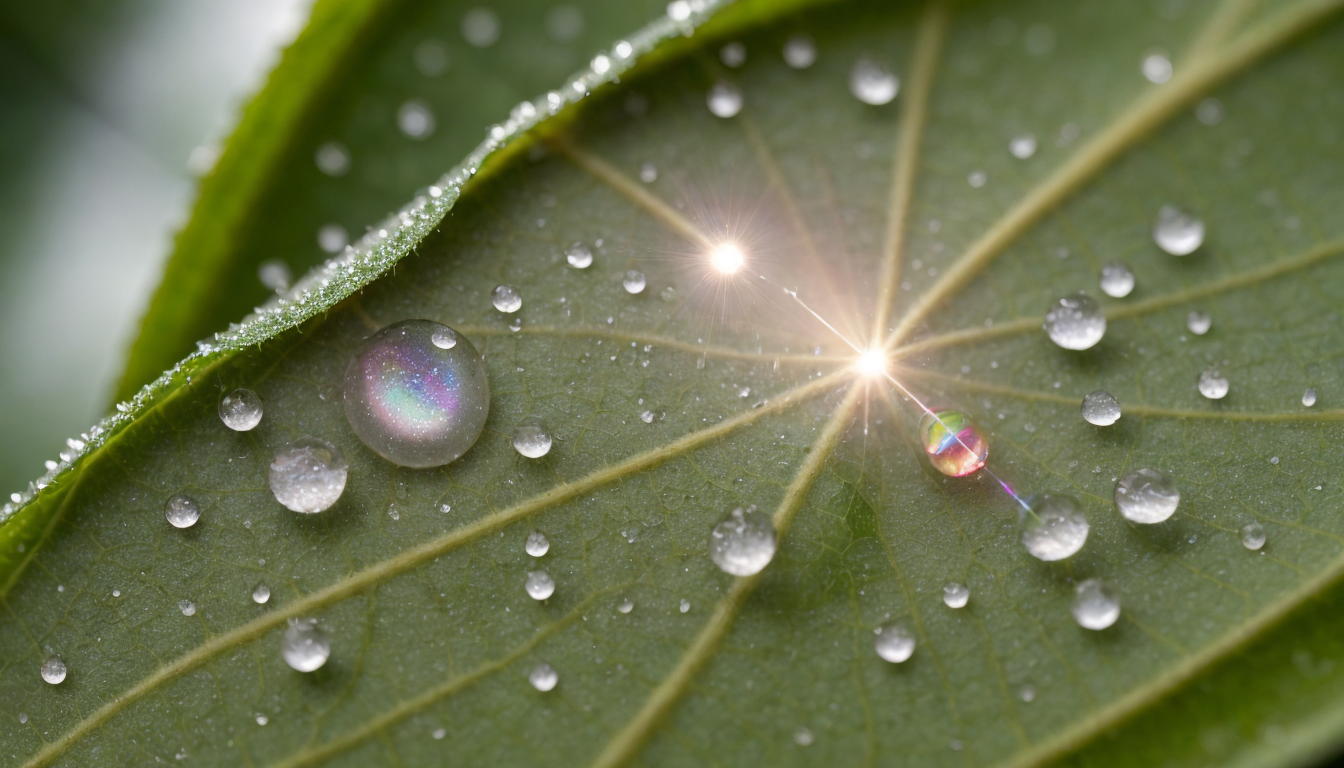
Rainbows are caused by the interaction between visible light from the Sun and water droplets suspended in the atmosphere. This process involves several key optical phenomena: refraction, internal reflection, and dispersion.
Refraction
When sunlight enters a water droplet, it slows down due to the change in medium (from air to water) and bends or refracts according to Snell's Law. The angle of refraction depends on the wavelength of light; shorter wavelengths (blue/violet) bend more than longer wavelengths (red).
Internal Reflection
Once inside the droplet, light reflects off the back surface of the drop and bounces back towards the front face where it exits the droplet. This internal reflection occurs multiple times within each water droplet, contributing to the formation of a rainbow.
Dispersion
As light exits the water droplet, it undergoes further refraction due to its different wavelengths bending at slightly different angles. This process separates white light into its constituent colors, creating the colorful arc seen in a rainbow.
Historical and Cultural Context
The phenomenon of rainbows has been observed by humans for millennia but was scientifically explained only relatively recently. Ancient cultures often attributed mystical or divine significance to these natural occurrences, which gradually gave way to more empirical explanations as scientific understanding advanced.
Historical Observations
Early accounts of rainbows appear in various ancient texts and myths. For instance, Greek mythology associates the rainbow with Iris, a messenger goddess who traveled between heaven and earth. Similarly, Norse mythology features Bifröst, a bridge made of a multi-colored rainbow connecting Midgard (Earth) to Asgard (Heaven).
Scientific Explanation
The scientific explanation for rainbows began to emerge in the 17th century when Sir Isaac Newton conducted experiments with prisms and sunlight. He demonstrated that white light is composed of multiple colors, which form a spectrum when refracted through a prism or water droplets.
Etymology and Terminology

The term "rainbow" itself comes from Old English words meaning "raining around," reflecting the observation that rainbows often appear when it rains but stops nearby. The word has roots in various languages and cultures, each with its own unique interpretation and significance.
Linguistic Origins
- English: Derived from "regnabow," a compound of "regnian" (to rain) and "boga" (a bow or arc).
- Latin: "Arcus pluvialis," meaning "rainbow."
- Greek: "Iris," named after the goddess associated with the rainbow in mythology.
Cultural Significance
Rainbows have played significant roles in various cultures, symbolizing hope, peace, and divine intervention. In modern times, they are often used as symbols of inclusivity and unity across diverse communities.
Symbolism Across Cultures
- Native American: Rainbows represent bridges between the physical and spiritual worlds.
- Christianity: Often associated with God's promise to Noah after the flood (Genesis 9:13).
- Modern Usage: Frequently used in LGBTQ+ pride symbolism as a symbol of diversity and acceptance.
Misconceptions About Rainbows
Despite their scientific explanation, many misconceptions persist regarding rainbows. Some common misunderstandings include the belief that rainbows are tangible objects one can touch or reach at the end of an arc.
Common Myths Debunked
- Rainbow End: The rainbow's "end" is a myth; it appears to move as you do, always remaining at a 42-degree angle from your line of sight.
- Personal Rainbows: Each observer sees their own unique rainbow based on the specific water droplets and atmospheric conditions present.
Conclusion
Rainbows are captivating natural phenomena resulting from complex interactions between sunlight and water droplets in the atmosphere. Through processes like refraction, internal reflection, and dispersion, white light is transformed into a spectrum of colors visible as an arc in the sky. Understanding the science behind rainbows not only demystifies these beautiful displays but also highlights the intricate workings of natural optics.