How Blue Holes Form in Ocean Floors
Blue holes are unique geological formations found in oceans around the world. These underwater sinkholes and vertical caves are captivating due to their striking appearance and ecological significance. Understanding how these features form provides insight into marine geology, hydrology, and the history of sea level changes.
TL;DR
- Blue holes are formed through a process involving freshwater dissolution of limestone.
- They typically occur in shallow coastal areas with porous rock layers.
- The formation process spans thousands to millions of years, starting from land-based sinkholes.
- These structures provide valuable information about past climate and ocean conditions.
Science Behind Blue Hole Formation
Geological Process
Blue holes form primarily through the dissolution of carbonate rocks such as limestone. This process begins when rainwater falls on land and mixes with carbon dioxide in the atmosphere to become slightly acidic. The acidified water then percolates into the ground, dissolving the calcium carbonate in limestone over time.
Freshwater Dissolution
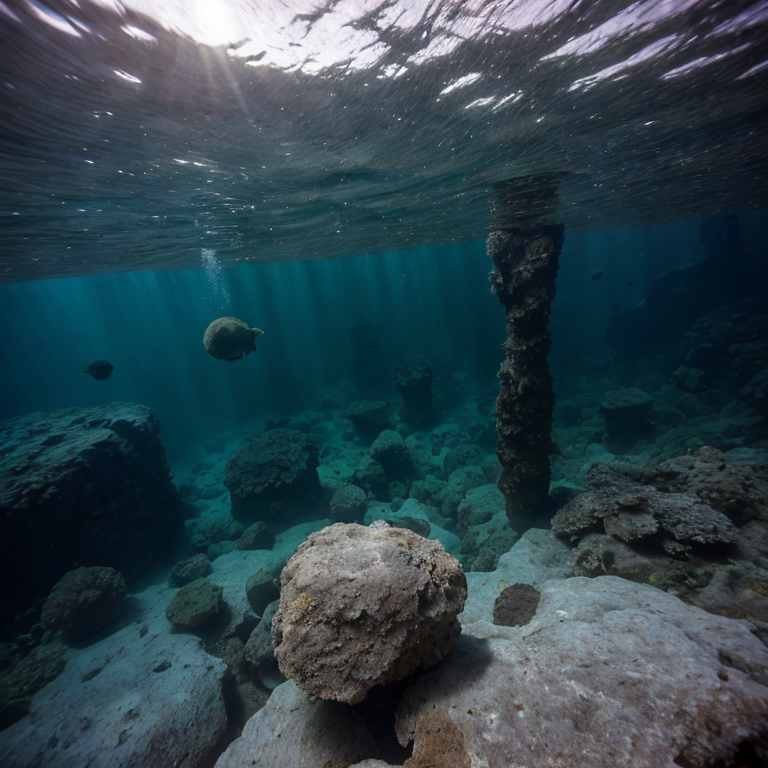
The key factor in blue hole formation is freshwater dissolution of rock. As this dissolved water moves through cracks and fissures in the limestone bedrock, it creates voids and caves underground. Over millions of years, these subterranean cavities can become extensive networks of tunnels and chambers.
Marine Erosion
Once sea levels rise sufficiently to cover a cave system that has been carved out by freshwater dissolution, marine erosion takes over. The saltwater from the ocean then continues to erode the limestone walls of the caves. This process typically occurs in coastal areas where the water table intersects with the sea level.
Vertical Dilation
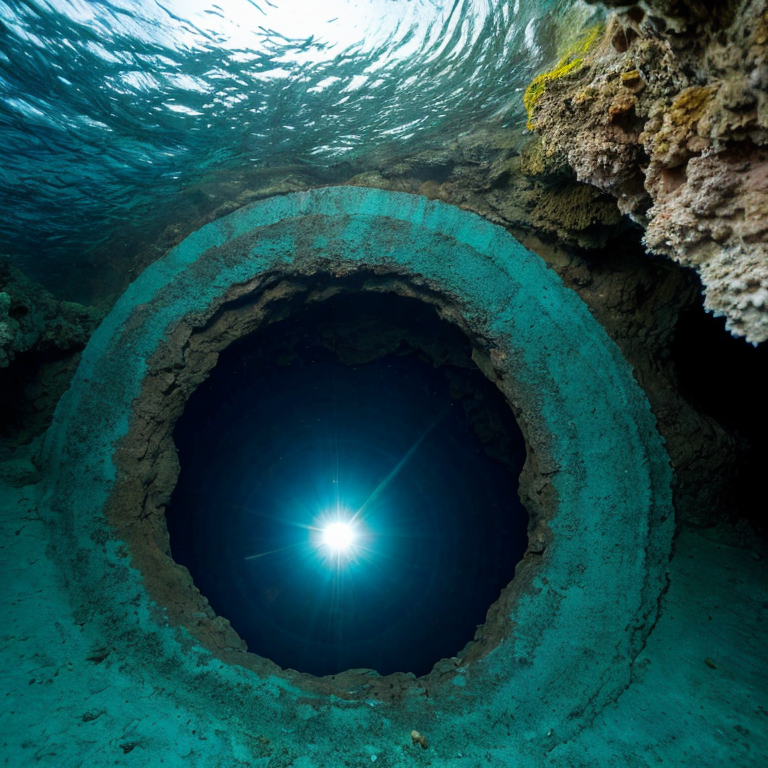
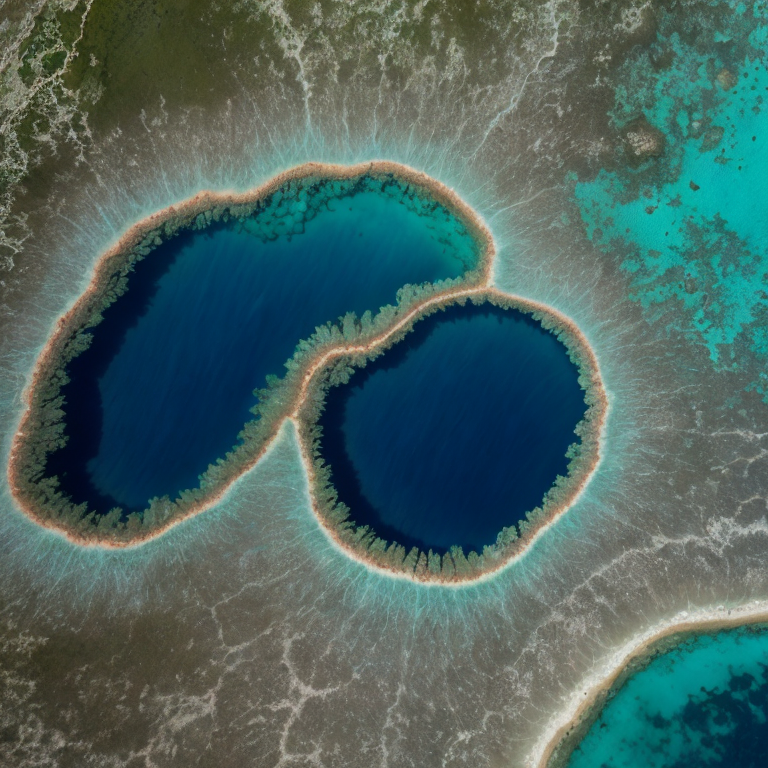
The vertical expansion of these submerged caves results in cylindrical or conical shapes known as blue holes. These features are often circular and can be hundreds to thousands of meters deep, extending from a shallow ocean floor into deeper waters.
History and Evolution
Early Formation Stages
Blue holes originated during periods when the sea level was lower than it is today, exposing subterranean cave systems to atmospheric conditions that allowed for freshwater dissolution. As these caves expanded downward, they eventually intersected with rising seas.
Sea Level Changes
During glacial periods, global sea levels were much lower due to extensive ice coverage on land masses like Greenland and Antarctica. This created vast areas of exposed limestone where blue holes could form. When the glaciers melted during interglacial periods, these subterranean caves became flooded by seawater.
Geological Time Frame
The formation process of blue holes spans thousands to millions of years. For example, the Great Blue Hole off the coast of Belize is estimated to have begun forming more than 150,000 years ago during a period when sea levels were much lower.
Etymology and Terminology
Origin of Name
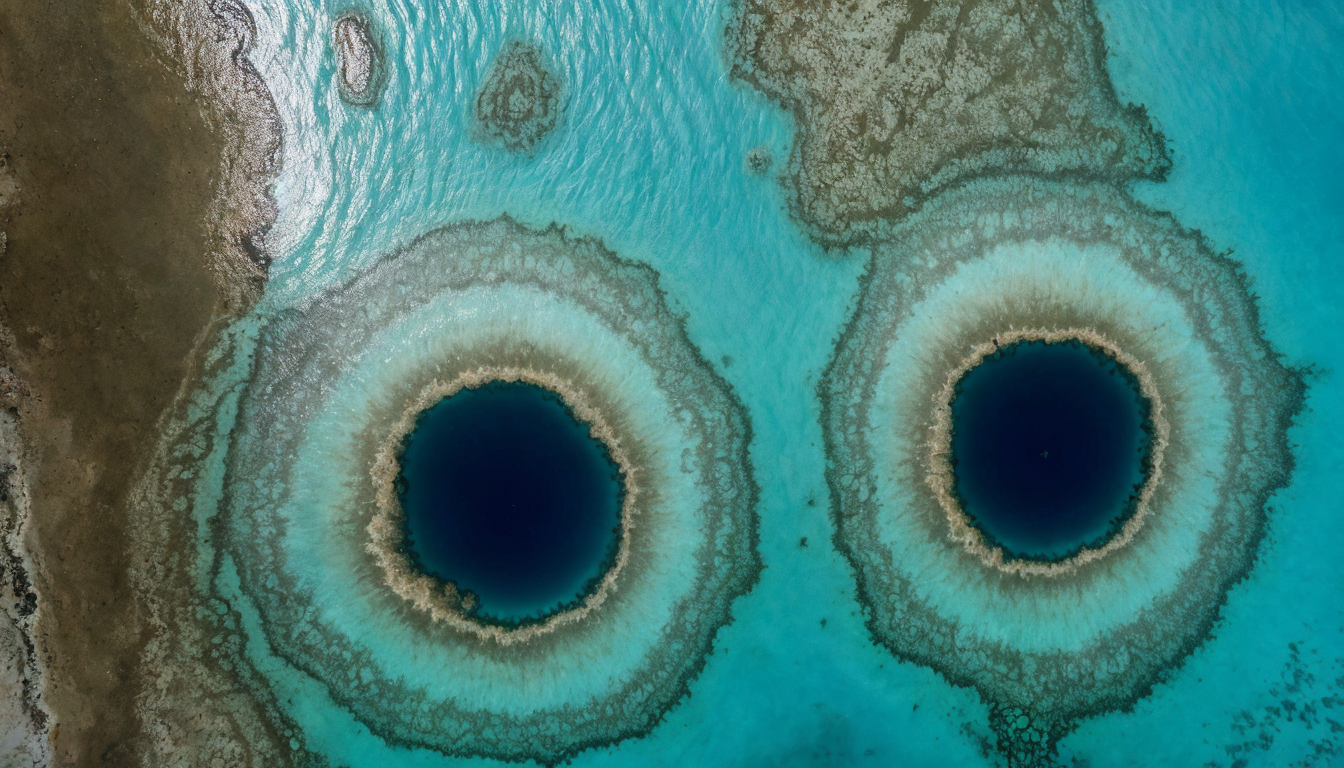
The term "blue hole" comes from their distinctive appearance as dark blue depressions in otherwise turquoise shallows. The color contrast is due to the deeper water and its ability to absorb more light than the surrounding shallow waters.
Scientific Classification
In geological terms, blue holes are classified as marine sinkholes or vertical caves. They represent a specific type of karst topography—landscape shaped by the dissolution of soluble rocks such as limestone.
Cultural Significance
Tourism and Recreation
Blue holes attract divers from around the world who seek to explore their unique underwater environments. These sites offer opportunities for scientific research, recreational diving, and tourism, contributing significantly to local economies in places like Belize and Australia.
Environmental Awareness
The study of blue holes enhances our understanding of oceanic ecosystems and marine biodiversity. They serve as natural laboratories for studying climate change impacts on marine environments over long timescales.
Misconceptions
Depth and Size
One common misconception is that all blue holes are extremely deep or large in size. While some, like the Great Blue Hole, can be quite impressive, many smaller versions exist around the world. Depths vary widely depending on geological conditions and historical sea level changes.
Origin of Freshwater Caves
Another myth is that blue holes form solely through marine erosion without any freshwater involvement. In reality, the initial formation occurs through freshwater dissolution before being submerged by rising seas.
Conclusion
Blue holes are remarkable natural features shaped by millions of years of geological processes involving both freshwater and marine environments. Their unique formation provides valuable insights into past climate conditions and sea level fluctuations. Understanding these formations enhances our appreciation for marine geology while also offering practical benefits in areas such as environmental research and tourism.