Why Does a Solar Eclipse Occur in 2026?
A solar eclipse occurs when the Moon passes between Earth and the Sun, casting its shadow on parts of our planet. In 2026, several regions will experience this astronomical event, which has fascinated humans for centuries due to its rarity and spectacular visual effects. This article delves into the scientific explanation behind a solar eclipse, its historical significance, cultural impact, and common misconceptions.
TL;DR
- A solar eclipse happens when the Moon moves between Earth and the Sun.
- There are three types of solar eclipses: total, partial, and annular.
- The next major solar eclipse in 2026 will be visible from parts of North America and Europe.
- Solar eclipses do not affect human health or the environment.
What is a Solar Eclipse?
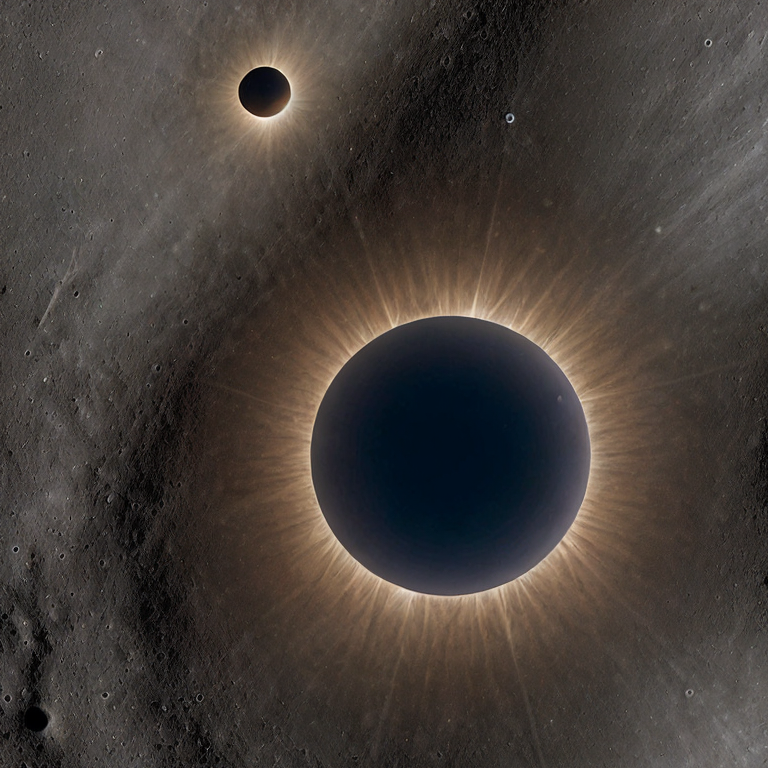
A solar eclipse occurs when the Moon’s orbit brings it directly between Earth and the Sun, causing the Moon to block some or all of the Sun's light. This alignment can create one of three types of solar eclipses: total, partial, or annular.
Types of Solar Eclipses
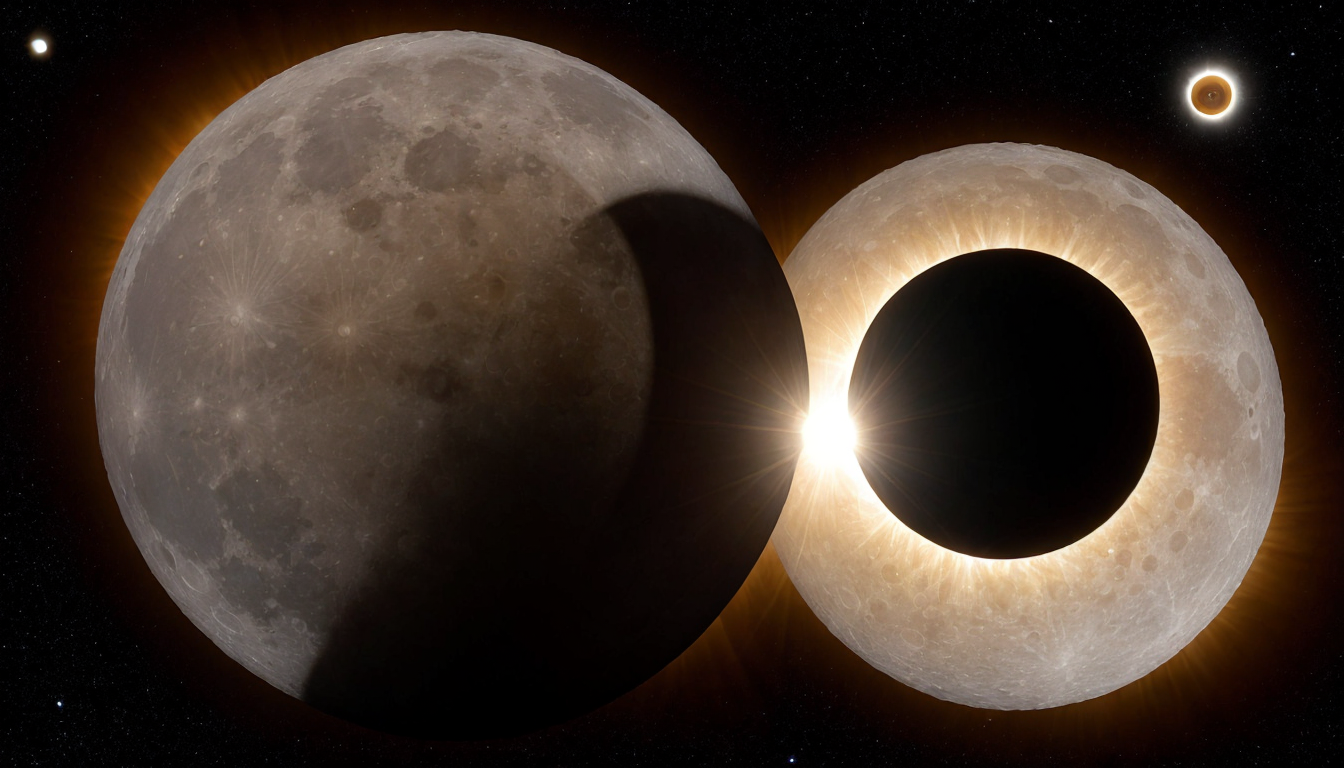
- Total Solar Eclipse: The Moon completely covers the Sun’s disk, revealing only its corona.
- Partial Solar Eclipse: Only a portion of the Sun is obscured by the Moon.
- Annular Solar Eclipse: The Moon appears smaller than the Sun, creating a "ring of fire" effect around it.
Geometry and Timing
The timing and visibility of solar eclipses depend on the relative positions of the Earth, Moon, and Sun, as well as their orbital paths. A total solar eclipse can only occur during new moon phases when the alignment is precise enough for the Moon to fully cover the Sun's disk from certain vantage points on Earth.
Historical Context
Solar eclipses have been observed throughout history, with early civilizations often attributing them to supernatural causes or omens. Ancient cultures developed methods to predict these events based on astronomical observations and mathematical calculations.
Early Predictions and Observations
- Ancient Babylonians: They recorded solar eclipse observations around 1560 BCE.
- Chinese Astronomers: Developed systematic records of eclipses dating back to the Shang Dynasty (circa 1600–1046 BCE).
- Greek Philosophers: Used geometry and trigonometry to predict eclipses, as described by Aristarchus around 270 BCE.
Modern Understanding
In the modern era, scientists have used precise measurements and advanced calculations to predict solar eclipses with great accuracy. This understanding has helped dispel myths and superstitions associated with these phenomena.
Etymology and Cultural Significance
The term "eclipse" comes from the Greek word "ekleipsis," meaning "failure to appear." Historically, solar eclipses have held significant cultural and religious importance across various societies.
Cultural Impact
- Ancient China: Eclipses were seen as a sign of celestial displeasure and often required imperial sacrifices.
- Mayan Civilization: Recorded precise predictions in their astronomical codices.
- European Folklore: Beliefs ranged from the idea that eclipses were battles between celestial beings to omens predicting doom.
Modern Astronomy
Today, solar eclipses are celebrated as scientific events and opportunities for public education. They attract both amateur astronomers and professional researchers who study the Sun's corona and other phenomena during these rare moments of complete sunlight obstruction.
Common Misconceptions
Despite extensive knowledge about solar eclipses, many misconceptions persist regarding their nature and effects on Earth.
Health Concerns
- Eye Damage: Looking directly at a solar eclipse can cause permanent eye damage. Proper viewing techniques, such as using certified eclipse glasses or indirect methods like pinhole projection, are essential.
Environmental Impact
- No Adverse Effects: Contrary to some beliefs, solar eclipses do not affect weather patterns, plant growth, or other environmental factors.
Conclusion
A solar eclipse is a natural astronomical phenomenon caused by the alignment of Earth, Moon, and Sun. While it has been a subject of awe and superstition throughout history, modern science provides clear explanations for its occurrence and timing. In 2026, several regions will experience these spectacular events, offering both scientific opportunities and cultural significance. Understanding the true nature of solar eclipses helps dispel myths and enhances public appreciation for astronomical phenomena.