
The True Story Behind the Trojan Horse: Unveiling the Myth
The Trojan Horse, one of the most famous stratagems in military history, symbolizes cunning deception. Often recounted in tales of the Trojan War, this story has transcended its mythological roots to become a metaphor for trickery and surprise in modern contexts. But how much of this legendary tale is rooted in historical fact, and how much is purely mythological embellishment?
TL;DR

- The Trojan Horse is a legendary episode from the Trojan War, primarily known through Greek mythology and epic poems.
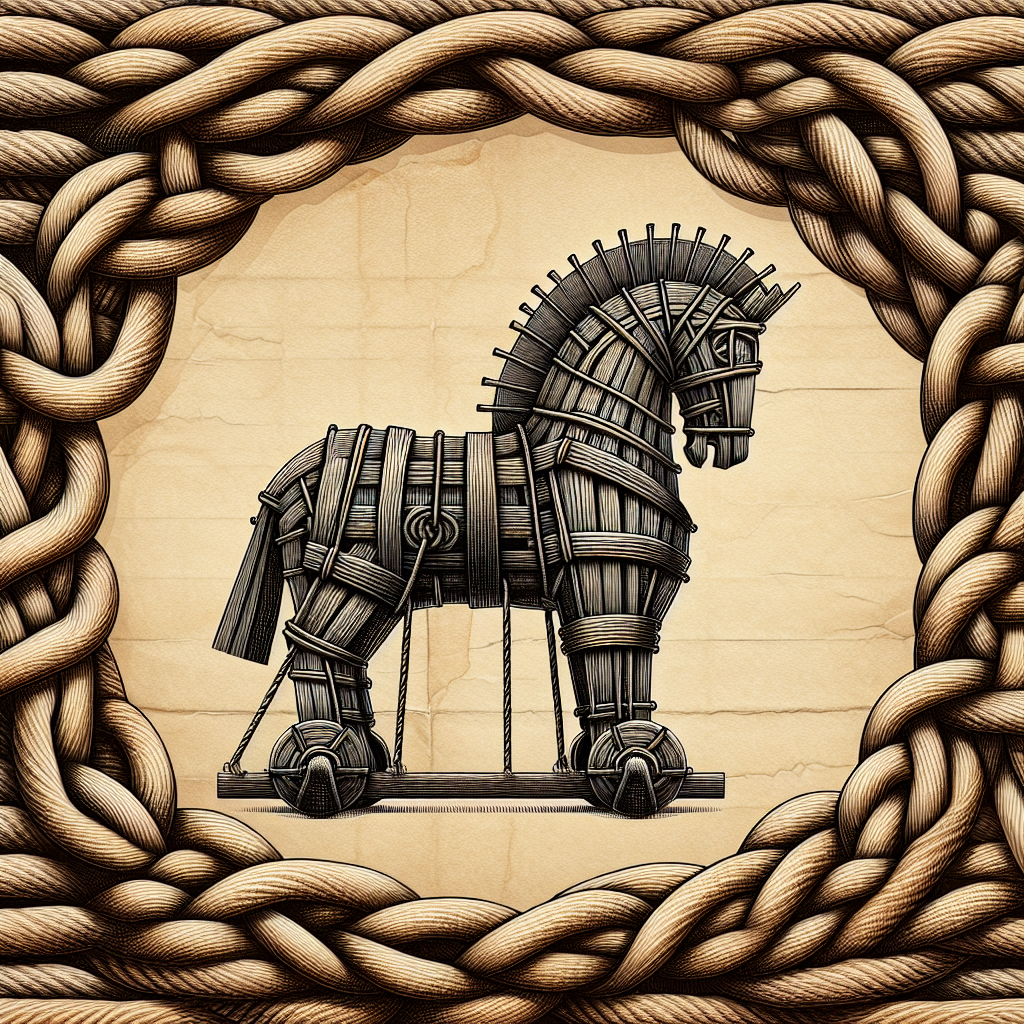
- According to myth, Greek soldiers hid inside a large wooden horse to infiltrate and ultimately conquer the city of Troy.
- There is no concrete archaeological evidence to confirm the historical existence of the Trojan Horse.
- The story is most famously recounted in Virgil's Latin epic, the Aeneid, rather than in Homer's earlier works, which only hint at the event.
- The Trojan Horse may symbolize innovative siege tactics or be a metaphor for unexpected threats.
- Modern interpretations include psychological, cultural, and military analyses of the myth.
Historical Context of the Trojan Horse
Origins in Literature
The tale of the Trojan Horse is primarily transmitted through ancient Greek and Roman literature, with the most detailed account appearing in Virgil’s Aeneid. Interestingly, Homer’s Iliad and Odyssey, while foundational texts for the Trojan War narrative, provide only oblique references to the Horse. The Iliad concludes before the use of the Horse, and the Odyssey mentions it briefly in its recounting of Odysseus’s adventures.
Archaeological Evidence
Excavations of the site traditionally considered to be ancient Troy, located in what is now Turkey, have revealed several layers of ruins, indicating prolonged periods of settlement and destruction. Archaeologist Heinrich Schliemann, who first excavated the site in the 1870s, believed he had found the historical Troy. Subsequent excavations have supported the view that Troy was a real city involved in a conflict around the 12th century BCE, potentially aligning with the legendary war. However, no evidence of a literal wooden horse has ever been uncovered.
The Science Behind Siege Warfare

Ancient Siege Techniques
The concept of the Trojan Horse might be seen as a metaphorical representation of actual siege techniques. Ancient armies often used subterfuge and psychological warfare to weaken their enemies. Techniques included tunneling, the use of battering rams, and scaling walls with ladders—all aimed at breaching city defenses.
Psychological Warfare
The psychological impact of the Trojan Horse, assuming its story was known in the ancient world beyond literary contexts, would have been profound. The idea that an enemy could be both ingenious and ruthless enough to devise such a plot could demoralize a besieged population or deter potential aggressors.
Etymology and Symbolism
Linguistic Roots
The term "Trojan Horse" in modern languages has come to mean any trick or stratagem that causes a target to invite a foe into a securely protected bastion or place, leading to its downfall. This usage underscores the tale’s emphasis on cunning over brute force.
Symbolic Interpretations
Symbolically, the Trojan Horse has been interpreted in various ways: as a caution against hubris, a reminder of the perils of accepting gifts without scrutiny, and as an embodiment of the Greek ideal of metis, or cunning intelligence.
Cultural and Psychological Interpretations
In Literature and Art
The story of the Trojan Horse has been a popular subject in Western art and literature, symbolizing ultimate betrayal or clever victory, depending on perspective. It has appeared in countless forms, from Renaissance paintings to modern films and literature, each adapting the story to fit contemporary themes and morals.
Psychological and Strategic Analysis
Psychologically, the Trojan Horse narrative explores themes of trust, betrayal, and the duality of human ingenuity used for both constructive and destructive ends. Strategically, it highlights the importance of innovative tactics in warfare, suggesting that victory often comes from thinking outside conventional parameters.
Misconceptions and Debates
Literal vs. Metaphorical Interpretation
A significant misconception about the Trojan Horse is the literal interpretation of the story. Some historians and archaeologists suggest that the tale may have originated from misinterpretations of historical events, transformed into symbolic narratives. For instance, the "horse" could have been a battering ram or other siege engine, later anthropomorphized into a horse in the retelling.
Historical Accuracy
The debate over the historical accuracy of the Trojan Horse also touches on broader questions about the veracity of oral traditions and their transformation into written epic poetry. This intertwines with discussions on the reliability of sources like Homer and Virgil, who lived centuries after the supposed events.
Conclusion
The story of the Trojan Horse, whether myth or reality, remains a powerful narrative about the dangers of deceit and the unexpected. While it is unlikely that a literal wooden horse was used as described in ancient texts, the story endures as a testament to human creativity and the psychological dimensions of warfare. As both a cautionary tale and a strategic archetype, the Trojan Horse continues to resonate across cultures and epochs, reminding us of the timeless nature of human conflict and cunning.