Understanding Gravity: How Does It Really Work?
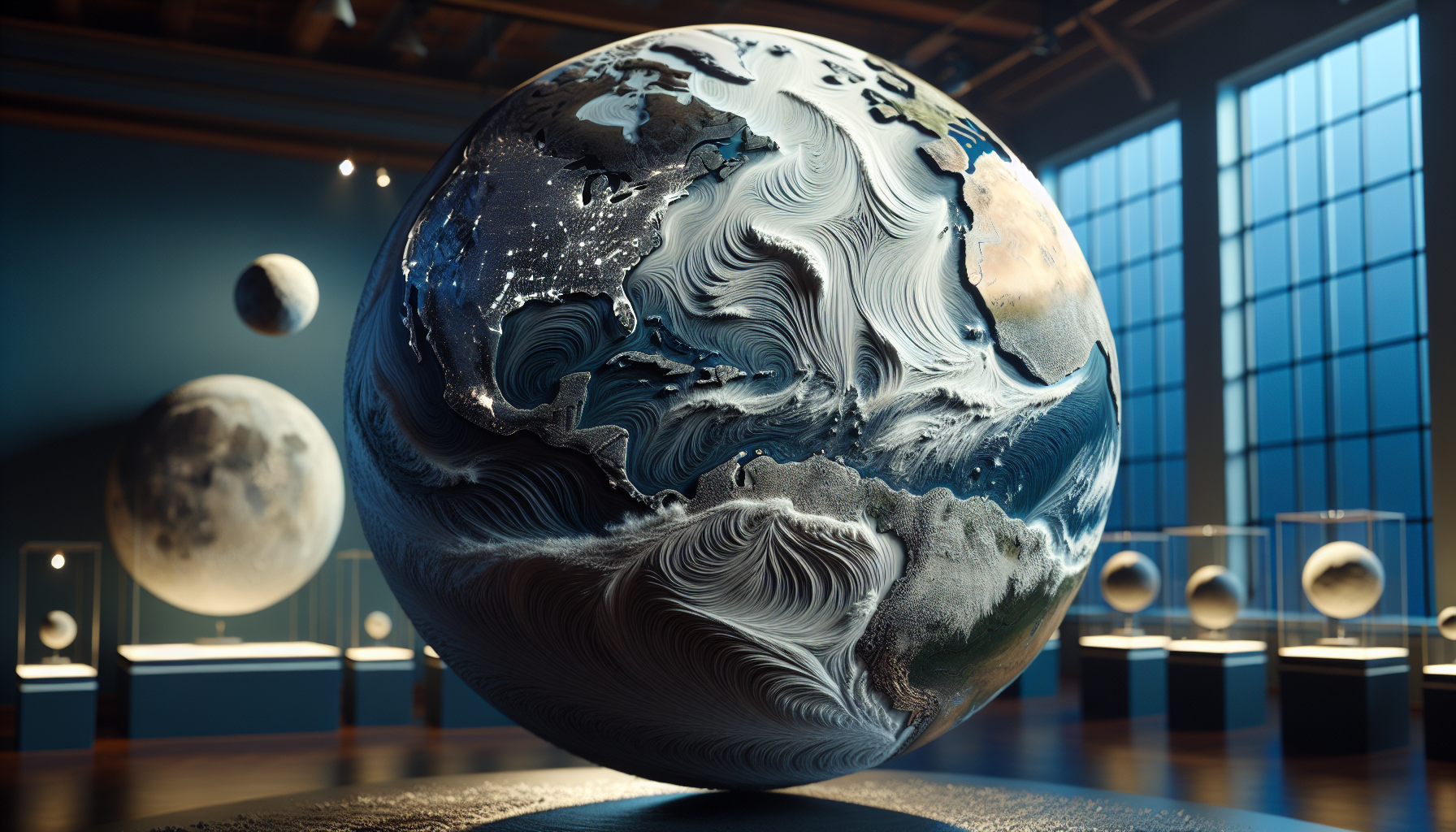
Gravity is an invisible force that affects every aspect of our daily lives, from keeping our feet on the ground to governing the motion of planets and stars across the universe. Despite its omnipresence, the true nature of gravity remains one of the most intriguing topics in physics. By examining the development and application of gravitational theories, we can gain deeper insights into how this fundamental force operates.
TL;DR

- Gravity is a fundamental force that attracts two bodies with mass towards each other.
- Newton's Law of Universal Gravitation provides a classical explanation, stating that the force of gravity is proportional to the mass of the objects and inversely proportional to the square of the distance between them.
- Einstein's General Theory of Relativity revolutionized our understanding by describing gravity as the curvature of spacetime caused by mass and energy.
- Gravitational forces influence everything from the orbits of planets to the structure of the universe.
- Recent advancements in physics explore gravity through the lens of quantum mechanics and the study of gravitational waves.
- Practical applications of gravitational theory include satellite navigation systems, predicting planetary motions, and understanding the cosmic scale structures of the universe.
The Science of Gravity
Classical Mechanics: Newton's Law of Universal Gravitation
Isaac Newton formulated the Law of Universal Gravitation in the 17th century, which posits that every particle of matter in the universe attracts every other particle with a force that is directly proportional to the product of their masses and inversely proportional to the square of the distance between their centers. This law not only explained earthly phenomena but also the motions of celestial bodies, providing a comprehensive framework that lasted for over two centuries.
Modern Physics: Einstein’s General Theory of Relativity
In 1915, Albert Einstein introduced a groundbreaking perspective on gravity with his General Theory of Relativity. According to Einstein, gravity is not a force acting at a distance as Newton proposed, but rather an effect of the curvature of spacetime itself, caused by mass and energy. This theory has passed numerous tests, from the bending of light by gravity to the recent detection of gravitational waves, and has expanded our understanding of the universe’s structure and the behavior of extreme cosmic phenomena like black holes.
Quantum Gravity and Gravitational Waves
The quest to unify quantum mechanics with gravity poses one of the greatest challenges in modern theoretical physics. Efforts like string theory and loop quantum gravity aim to reconcile the apparent inconsistencies between quantum mechanics and general relativity. Additionally, the detection of gravitational waves—ripples in spacetime caused by massive accelerating objects—has opened new avenues for astronomical observation and enhanced our understanding of the universe's violent events.
Historical Perspectives on Gravity
Early Theories and Philosophical Insights
Before Newton, thinkers like Aristotle and Galileo had differing views on gravity. Aristotle believed that objects moved toward their natural places in a hierarchical cosmos, whereas Galileo's experiments showed that objects accelerate at a constant rate regardless of their mass, contradicting Aristotle’s theory. This set the stage for Newton’s work, which synthesized observations into a universal law.
Newton's Synthesis and Its Impact
Newton's formulation of gravitation was revolutionary, not only for its predictive capabilities but also for its universal applicability, from the apple falling from a tree to the moons of Jupiter. His work laid the foundational framework of classical mechanics, which dominated the scientific view of the physical universe for the next three centuries.
Etymology and Conceptual Understanding
The Word "Gravity"
The term "gravity" is derived from the Latin word "gravitas," which means "weight" or "heaviness." This linguistic root reflects the intrinsic quality of gravity as the force associated with the mass of objects, emphasizing its universal influence across different masses and distances.
Changing Concepts Over Time
The concept of gravity has evolved significantly over the centuries from a mystical or inherent quality of objects to a well-defined scientific principle. Each scientific revolution brought about a deeper and more accurate understanding of gravity, shifting from a mysterious pull to a describable interaction within the framework of spacetime.
Misconceptions and Clarifications
Common Misunderstandings
Despite its fundamental nature, gravity is often misunderstood. Common misconceptions include the idea that gravity is uniform across the Earth (it varies slightly depending on location) and that it cannot affect light (it does, as evidenced by gravitational lensing in astronomy).
Gravity in Popular Culture
In popular culture, gravity is frequently depicted in a variety of contexts, from the dramatic portrayal of black holes in science fiction movies to the use of zero-gravity environments in space travel narratives. While these portrayals can spark interest in scientific topics, they sometimes lead to misunderstandings about how gravity functions in different environments.
Conclusion
Gravity, a force that was once considered mystical and beyond complete understanding, has become one of the most well-characterized forces in physics through centuries of inquiry and advancement. From Newton's laws to Einstein's theory of relativity, the journey to understand gravity has not only reshaped our view of the universe but also highlighted the interconnectedness of all matter. As research continues, particularly in the realm of quantum gravity and gravitational waves, our understanding of gravity may evolve further, promising new insights into the fabric of the universe and the fundamental forces that govern it.