Unveiling the Mysteries: What Are Black Holes?
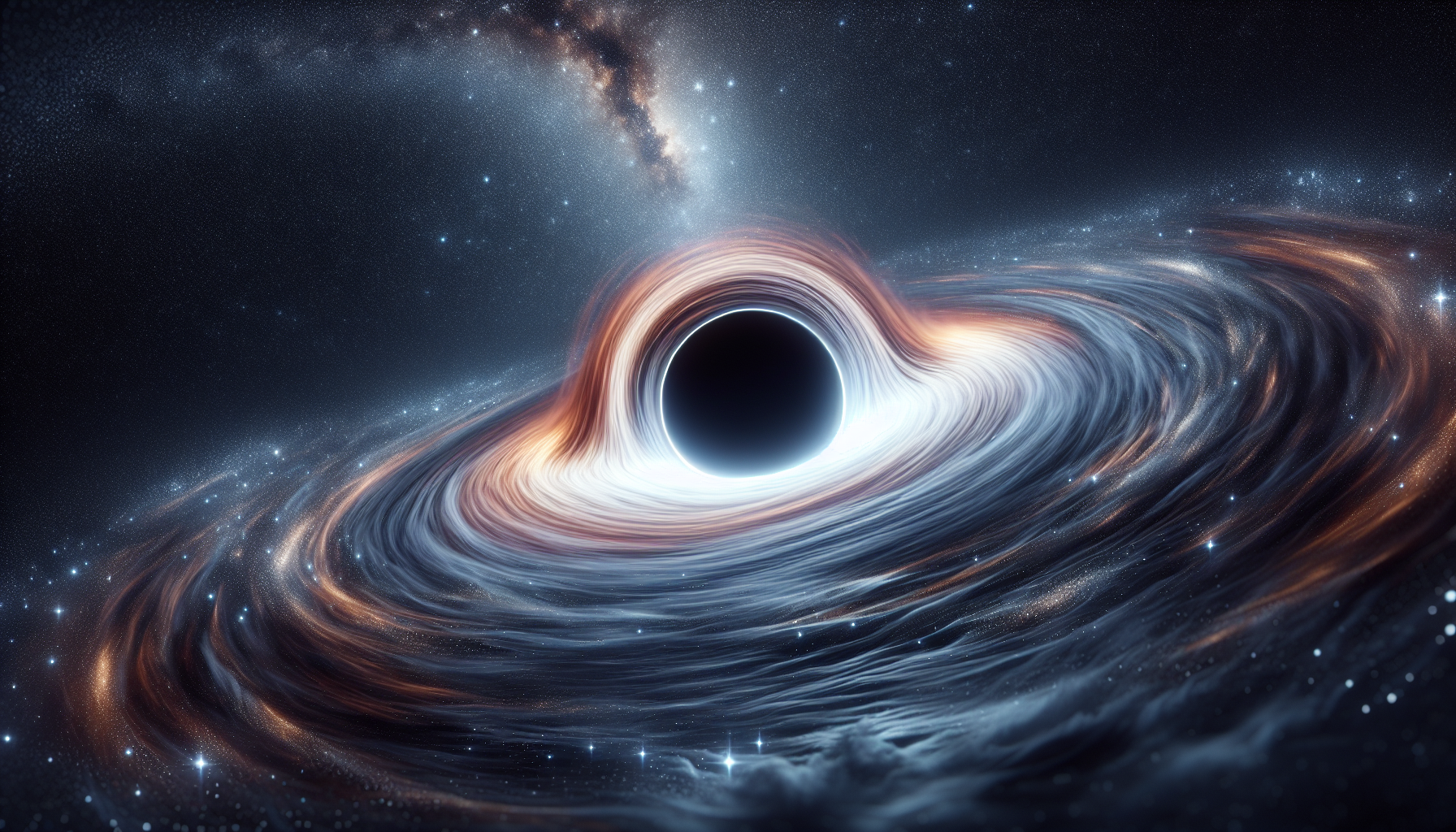
Black holes, one of the universe's most mysterious phenomena, represent regions in space where gravitational forces are so strong that nothing, not even light, can escape from them. These cosmic enigmas challenge our understanding of physics and continue to captivate both the scientific community and the public's imagination.
TL;DR
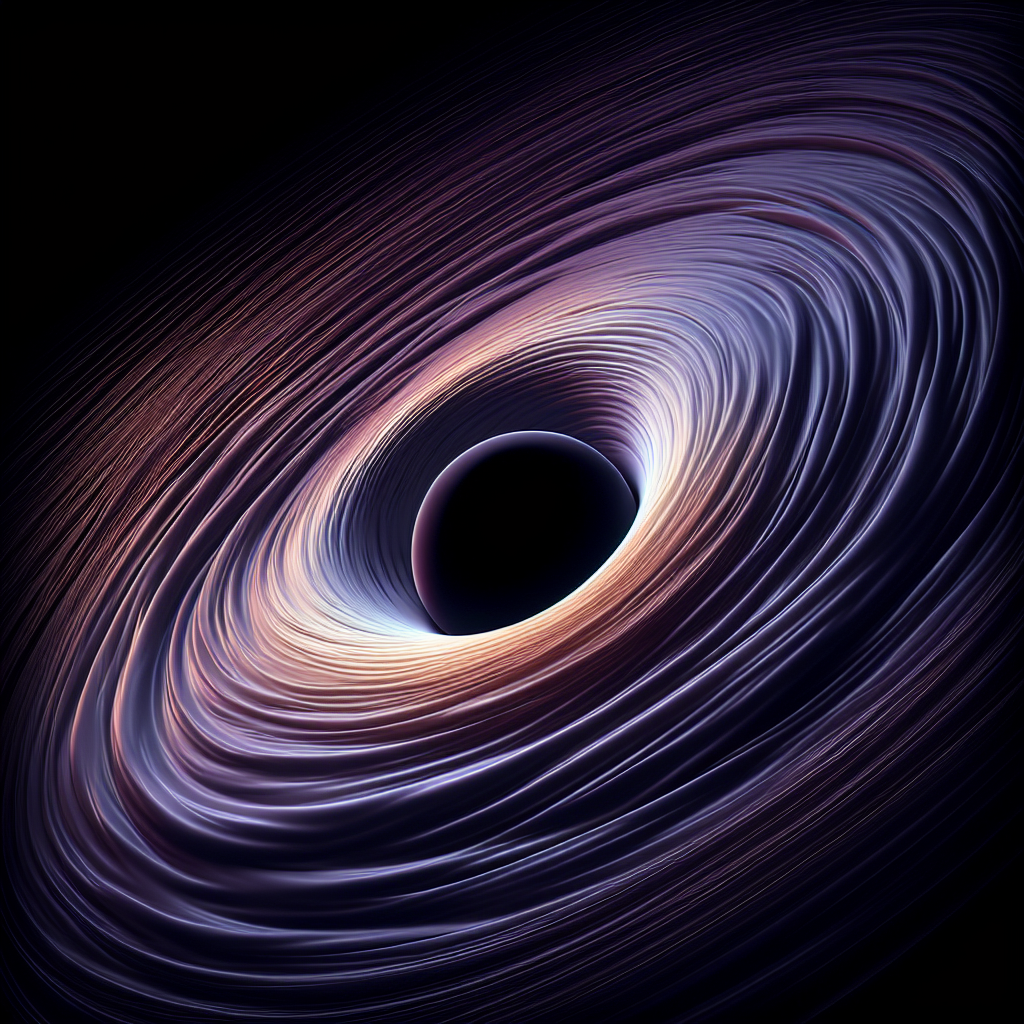
- Nature of Black Holes: Cosmic entities with gravitational pulls so intense that nothing, including light, can escape once it crosses the event horizon.
- Formation: Most black holes form from the remnants of a large star that dies in a supernova explosion.
- Types: Includes stellar, supermassive, and intermediate-mass black holes.
- Significance in Cosmos: Play a crucial role in the structure of galaxies and the evolution of the universe.
- Detection: Detected indirectly through their interaction with other matter and the gravitational waves they produce.
- Research Developments 2025: Recent advances have focused on understanding their growth, the role in galaxy formation, and the properties of Hawking radiation.
Understanding Black Holes
The Science Behind Black Holes
Gravitational Basics
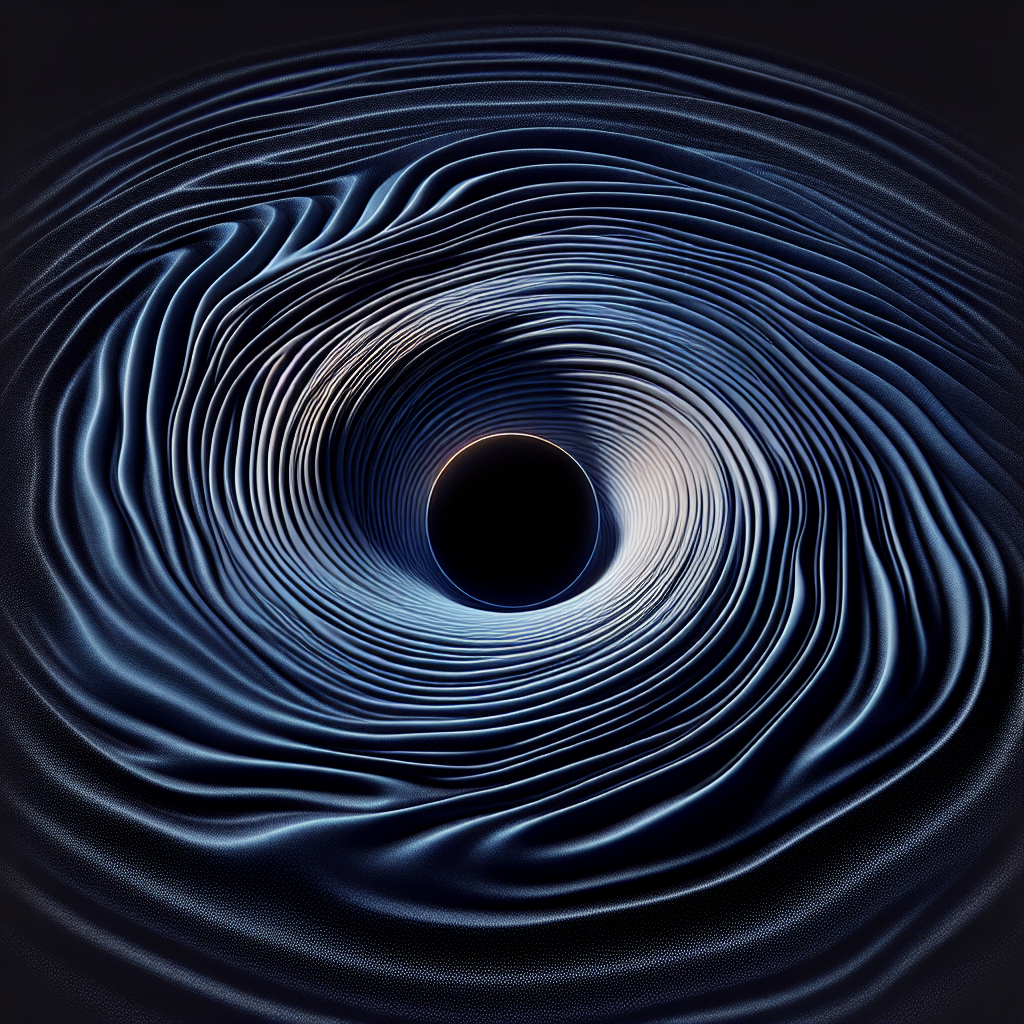
A black hole forms when a massive star's core collapses under the force of its own gravity, a process typically following a supernova explosion. This collapse results in a singularity, a point in space where mass is compressed into an infinitely small space, making density and gravity infinitely large.
Event Horizon
Around the singularity lies the event horizon, the boundary beyond which nothing can return. Crossing this boundary means that the escape velocity necessary to leave exceeds the speed of light, thereby trapping light and matter.
Types of Black Holes
- Stellar Black Holes: Formed by the gravitational collapse of individual stars, their masses can be up to 20 times greater than that of the Sun.
- Supermassive Black Holes: Reside at the centers of most large galaxies, including the Milky Way, with masses that are millions to billions of times that of the Sun.
- Intermediate-Mass Black Holes: These are less understood and are thought to form through the merger of stellar black holes or as a result of massive star collisions in dense star clusters.
Formation and Growth
Black holes can grow by accreting mass from their surroundings or by merging with other black holes. This growth process is typically observed in the accretion disks of black holes, where the material being pulled in heats up and emits electromagnetic radiation detectable by telescopes.
Historical Context
Discovery and Study
The concept of a body so massive that even light could not escape was first put forth by John Michell in 1783. However, the modern theory of black holes did not develop until the 20th century with Albert Einstein's theory of general relativity. Subsequent decades saw significant theoretical work, notably by physicists such as Karl Schwarzschild, Subrahmanyan Chandrasekhar, and Stephen Hawking.
Milestones in Black Hole Research
- 1916: Karl Schwarzschild discovers the Schwarzschild radius, a measure of the size of the event horizon.
- 1967: The term "black hole" is popularized by John Archibald Wheeler.
- 1974: Stephen Hawking proposes Hawking radiation, whereby black holes can emit radiation.
Etymology and Cultural Impact
Origin of the Term
The term "black hole" was first used in 1967 by physicist John Archibald Wheeler. Before that, they were often referred to as "frozen stars" because it was believed that time would stop at the event horizon.
Black Holes in Popular Culture
Black holes have captured the public imagination and feature prominently in science fiction and popular media. They are often portrayed as cosmic vacuums, swallowing everything in their path, although this is a misconception.
Common Misconceptions
Not Cosmic Vacuums
Contrary to popular belief, black holes do not 'suck' material in from large distances. Material falls into them the same way it falls onto any other body in space, through the gravitational pull.
Size and Visibility
Another misconception is that black holes are infinitely large. In reality, the singularity is a point of infinite density, but the observable part—the event horizon—is finite and varies in size.
Hawking Radiation
Often misunderstood, Hawking radiation allows black holes to lose mass and energy by emitting radiation, a process that could eventually lead to their evaporation.
Conclusion
Black holes remain one of the most fascinating subjects in cosmology. Their complex nature challenges existing physical theories, prompting continuous research and study. As tools and technologies advance, especially with projects like the Event Horizon Telescope and new gravitational wave detectors, our understanding of black holes will continue to evolve. This ongoing research not only helps in understanding black holes themselves but also sheds light on the broader workings of our universe, illustrating once again how much remains to be discovered in the vast expanses of space.