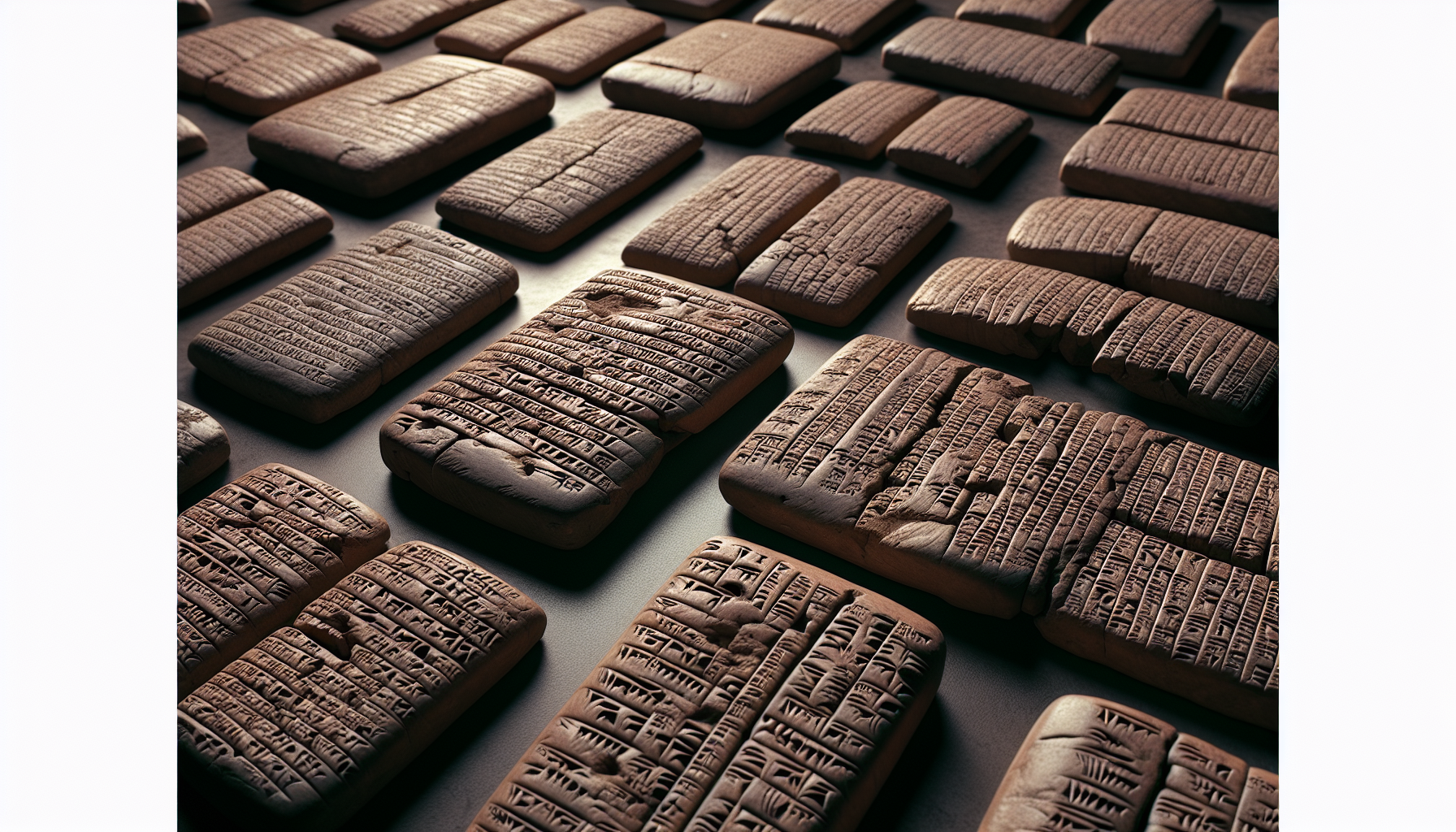
Exploring the Oldest Civilization Known to Man
The quest to identify the earliest civilization is a fascinating journey through time, revealing the complex layers of human development. The Sumerians of Mesopotamia, emerging around 4500 BCE, are commonly recognized as the founders of the first known civilization. Their development of written language, complex societal structures, and innovative technologies marks a significant turning point in human history.
TL;DR

- The oldest known civilization is that of the Sumerians, originating in Mesopotamia around 4500 BCE.
- Sumerians introduced cuneiform writing, advanced city planning, and legal systems.
- Mesopotamia, often called the "Cradle of Civilization," fostered this early society.
- Archaeological discoveries continue to provide insights into Sumerian life and innovations.
- Understanding the Sumerians helps reveal the origins and evolution of early urban societies.
- Misconceptions about "the oldest civilization" often overlook the complexity and diversity of early human societies.
The Science of Dating Civilizations

Determining the age and extent of ancient civilizations relies heavily on archaeological and genetic evidence. Archaeologists use a combination of radiocarbon dating, stratigraphy, and artifact analysis to establish timelines. Geneticists contribute by analyzing DNA from ancient remains to trace lineage and migration patterns. These scientific methods have been instrumental in affirming the Sumerians of Mesopotamia as one of the earliest civilizations.
Archaeological Evidence
Excavations in regions like Sumer (modern-day southern Iraq) have uncovered detailed urban layouts, ziggurats (massive step pyramids), and extensive administrative records on clay tablets. These findings illustrate a highly organized society capable of complex architectural and engineering projects.
Genetic Insights
Genetic studies involve examining the DNA from buried remains to understand the biological and social makeup of ancient populations. This data helps scientists track the movement of people across regions, potentially indicating the spread of technological and cultural practices from Mesopotamia to surrounding areas.
Historical Overview of the Sumerians

The Sumerians settled in what is now southern Iraq, an area rich in fertile soil due to annual flooding from the Tigris and Euphrates rivers. This geographic advantage allowed them to develop agriculture that supported a growing population and led to the formation of cities.
Early Urban Development
By 3500 BCE, cities such as Uruk, and later Ur and Eridu, were established, featuring distinct social structures and governance. These cities were among the first to use writing—cuneiform—for record-keeping, which was critical for managing resources, trade, and governance.
Societal Structure
Sumerian society was organized with a ruling class, religious leaders, and a system of workers and farmers. This hierarchy was reflected in their legal systems, recorded in the Code of Ur-Nammu—the oldest known law code, predating Hammurabi's by centuries.
Etymology of "Civilization"
The term "civilization" originates from the Latin "civitas," meaning "city". Initially, it referred to the state of being civilized, typically in contrast to a perceived less organized or 'barbaric' state. Over time, the definition of civilization has expanded to include not just urban development but also aspects like technological advancement, cultural complexity, and social organization.
Cultural Contributions of the Sumerians
The Sumerians' contributions to civilization were profound and varied, including technological innovations, cultural practices, and intellectual achievements.
Innovations in Writing and Education
Cuneiform, developed by the Sumerians, is one of the earliest known writing systems. It was initially used for recording transactions, laws, and eventually literature, such as the Epic of Gilgamesh.
Architectural and Engineering Feats
Their architectural prowess is evident in their construction of ziggurats, which served religious purposes and demonstrated advanced knowledge of building techniques.
Religious and Mythological Legacy
Sumerian religion was polytheistic, with a pantheon of gods who they believed controlled all aspects of life. Their myths and epic tales, inscribed on clay tablets, have influenced various cultural narratives and literary traditions.
Misconceptions About Ancient Civilizations
There are several common misconceptions about the "oldest" civilization:
The Concept of "First"
While the Sumerians are often cited as the first civilization, it is essential to recognize that other regions like the Indus Valley and ancient China also developed complex societies roughly contemporaneously. The notion of a "first" civilization is more about the context and specific characteristics rather than a clear-cut beginning.
The Linear Progression Fallacy
The development of human societies is not linear or universal. Different regions have experienced advancements and declines in various aspects independently of each other.
Conclusion
The Sumerians of Mesopotamia present a compelling case for being one of the earliest civilizations, marked by their development of writing, structured cities, and complex societal roles. However, understanding the origins of civilization requires a broader perspective that appreciates the simultaneous and diverse developments in human societies across the globe. The study of ancient civilizations like the Sumerians not only sheds light on our past but also enriches our understanding of the collective human journey.