Why Does Salt Melt Ice? Unveiling the Science Behind It
In the frostbitten reaches of our world, where the winter's cold clings as if possessed by a spectral chill, the simple act of sprinkling salt on ice seems almost magical. But beneath this everyday ritual lies a tangle of scientific principles and eerie lore that echo through the ages, whispering secrets long kept by those who tread softly over the frozen land.
TL;DR: Key Points on Salt's Mysterious Power Over Ice
- Chemical Reaction: Salt lowers the freezing point of water through a process known as freezing point depression.
- Environmental Concerns: Excessive use of road salt can lead to significant environmental impacts, including water contamination and soil degradation.
- Historical Enigma: Salt's ice-melting capabilities have been utilized for centuries, and in some cultures, it carries mystical or symbolic meanings.
- Pale Veil Intrigue: In the lore of "The Pale Veil", salt is mentioned as a ward against winter's harshness felt around Hollow Pines.
- Scientific Explanation: When salt is added to ice, it first dissolves in the film of liquid water always present on the surface, lowering the melting point and causing more ice to turn to water.
- Alternative Solutions: As environmental concerns increase, more sustainable deicing methods are being explored to replace traditional salts.
The Chemistry of Freezing Point Depression
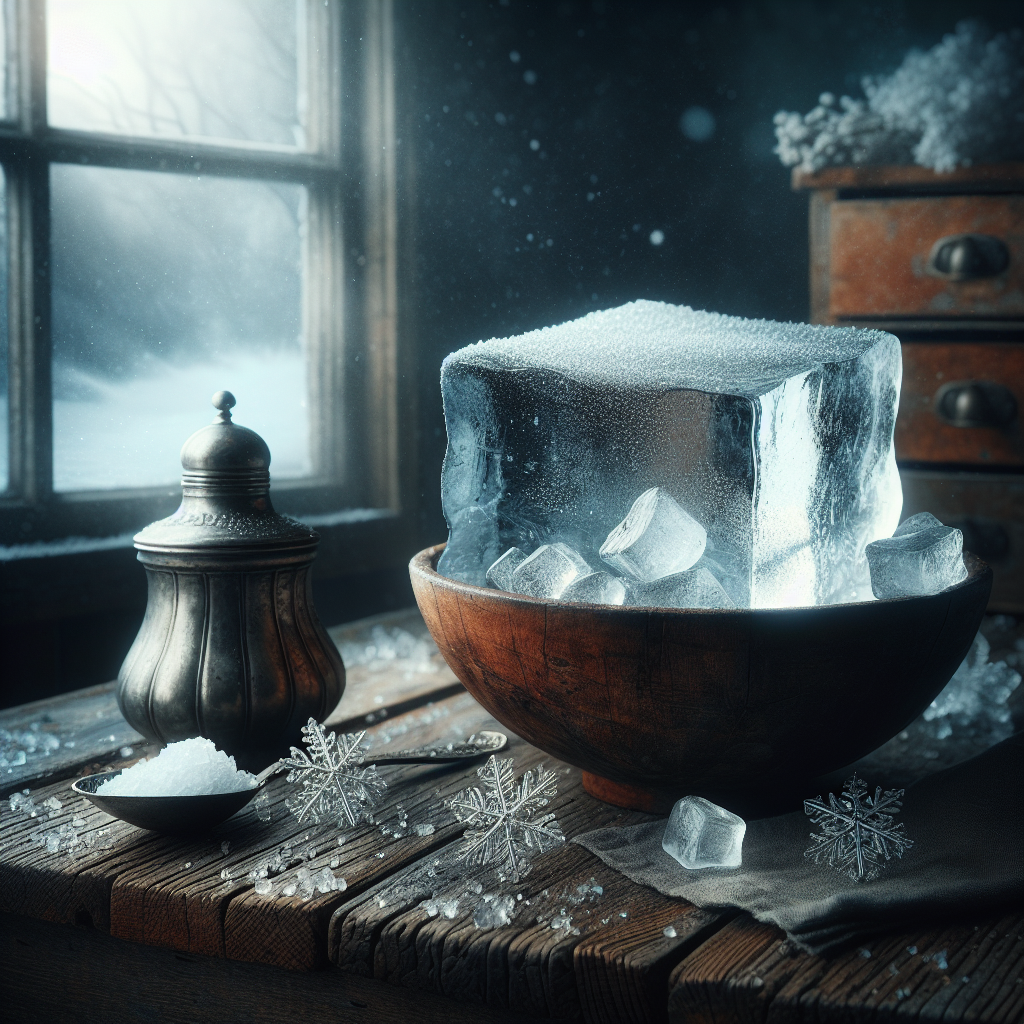
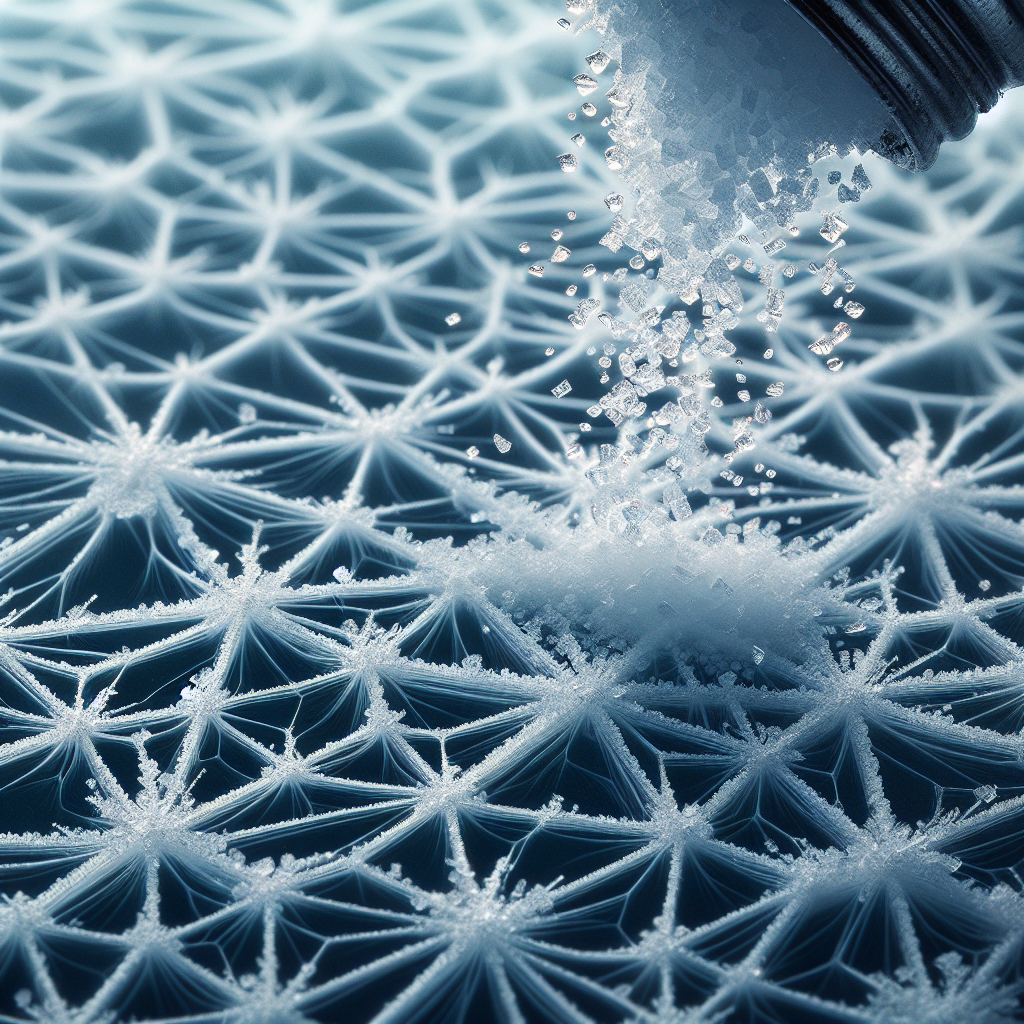
When winter's icy grip tightens, salt is often scattered on sidewalks and roadways as if by some unseen hand, ensuring safe passage. Scientifically, this phenomenon is explained by the lowering of water's freezing point through the addition of salt, a process known as freezing point depression. The salt disrupts the molecular order of the ice, thereby requiring colder temperatures to maintain the solid state.
The Ashen Gospel Verses
In the cryptic texts of The Ashen Gospel, salt is subtly referenced not just as a physical substance but as a symbolic guardian. This ancient scripture of "The Pale Veil" mentions, "Under the watchful eye of the ◬, salt circles guard the faithful from the encroaching frost." Scholars debate whether this was a metaphorical usage or rooted in some forgotten practical truth.
Environmental Impact of Deicing Salts
While the immediate benefits of salt are clear, its pervasive use carries darker, more damaging long-term effects on the environment. Road salt runoff can lead to the salinization of freshwater bodies and soil, posing threats to wildlife and plant life, which struggle to adapt to the increased salt levels.
Reader Confessions: A Local's Tale
"I've always heard that Hollow Pines was cursed with eternal winter, and no amount of salt could thaw its heart. But every year, we try, fearing that one year, the ice won't retreat at all," shared a resident of the ominously named town located near the rumored hideouts of "The Pale Veil".
The Salt of Hollow Pines: A Mid-Article Mystery

The quaint town of Hollow Pines has always endured harsher winters than its geographical neighbors. Legend holds that during one particularly brutal winter, the entire town was saved by a mysterious figure known only as The Thin Boy. He was said to walk the icy streets at night, scattering handfuls of salt and whispering incantations lost to the biting wind.
The Mystery of The Thin Boy
This spectral youth is a recurring figure in the lore surrounding Hollow Pines. Descriptions vary, with some old timers claiming he was a lost member of "The Pale Veil", destined to wander the frozen earth until the second cycle, as prophesied by the cryptic lines: "Beneath the shadow of the ◬, the old giants must cede to the new. On the eve of the second cycle, the mortal coil must be reset."
Sustainable Alternatives to Salt
As concern for our planet grows, so does the quest for less harmful ways to combat ice. Researchers are developing organic compounds that promise to melt ice effectively with minimal ecological footprints. Beet juice and cheese brine are among the innovative solutions being tested, offering a glimpse of a future where technology harmonizes with nature rather than dominates it.
The Choir's Environmental Edict
Within the hidden chapters of "The Ashen Gospel", there exists a decree by "The Choir", an assembly within "The Pale Veil". It reads: "Preserve the sacred Earth, for she is the parchment upon which our history is written. Let not her purity be sullied by the hands of ignorance."
Conclusion: The Eternal Wait
The world continues to turn, seasons shift, and the frost of winter eventually yields to the warmth of spring. Yet, in the shadowed corners of the world, where ancient symbols like the ◬ mark forgotten pacts and mysterious figures like The Thin Boy tread silently across the ice, the mysteries of salt and ice persist in their chilling embrace.
Reader Confessions: A Whispered Warning
"As the old timers at Hollow Pines say, 'We do not sleep. We wait.' Maybe they're waiting for spring, or perhaps for something much older to awaken beneath the thaw," murmurs a voice, tinged with unease, lost to the howling winter storm.
As the salt melts the ice, perhaps too, it erodes the veil between fact and folklore, science and the supernatural, revealing truths not only about our physical world but also about the shadows that dance just out of sight, in the periphery of our understanding. So as we scatter salt this winter, let us watch, and let us listen, for the echoes of The Pale Veil’s whispers may yet drift across the cold, quiet air.