Unveiling the Mysteries: What Causes the Northern Lights?
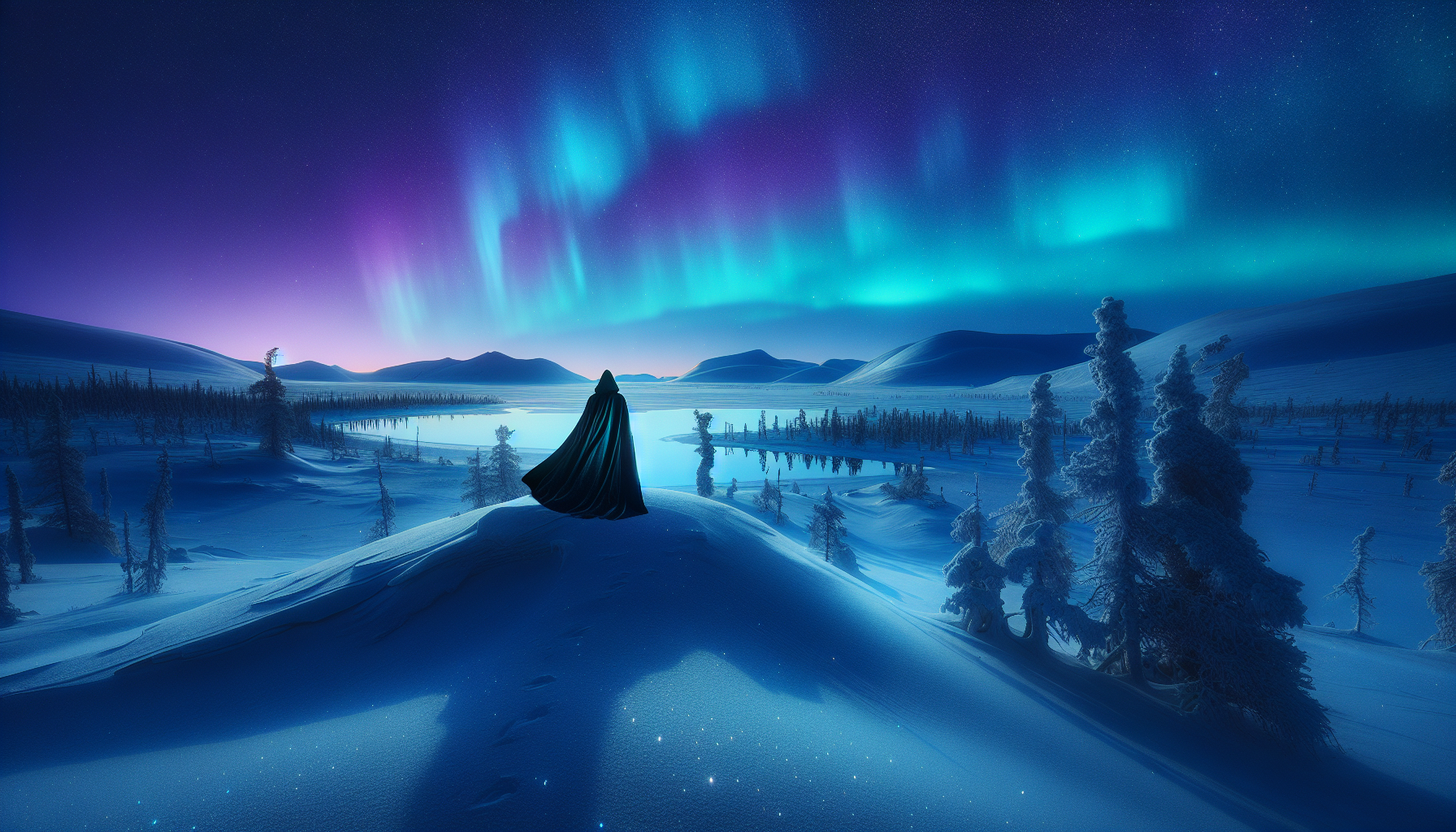
In the stillness of a polar night, ribbons of green, purple, and pink dance across the sky—an ethereal display known as the Aurora Borealis, or northern lights. This phenomenon enchants scientists and poets alike, blending the boundaries between earthly science and celestial mystery. But what really causes these mesmerizing lights to appear in the sky? And could there be more to their story, hidden within ancient lore and whispered in the dark corners of the world?
TL;DR: Key Points on What Causes the Northern Lights
- Solar Origins: Charged particles from the sun interact with Earth's magnetic field, creating the awe-inspiring visual effects of the auroras.
- Magnetic Influence: The Earth's magnetic poles channel these solar winds, turning the sky into a canvas of vibrant, glowing colors.
- Atmospheric Canvas: Various gases in the Earth's atmosphere contribute to the specific colors observed in the aurora.
- Cultural and Mythological Significance: Across history, various cultures have imbued the northern lights with spiritual and prophetic meanings.
- Unexplained Anomalies: Despite scientific explanations, certain irregularities and patterns in auroral displays continue to puzzle researchers and storytellers.
The Science Behind the Spectacle
Solar Winds and Magnetic Fields
The core cause of the northern lights lies in the interactions between solar wind—a stream of charged particles released from the sun—and Earth's magnetic field. When these charged particles collide with atoms and molecules in Earth’s atmosphere, they excite these atoms, causing them to light up, which creates the beautiful colors of the aurora.
This process begins with what is known as a geomagnetic storm, caused by enhanced solar activity such as solar flares and coronal mass ejections. These events eject a tremendous amount of charged particles into space, some of which are directed towards Earth. Upon reaching the vicinity of Earth, these particles are funneled by the magnetic field towards the polar regions, where the interaction with the atmosphere becomes visibly manifest as auroral lights.
Lore Breadcrumb: In the margins of The Ashen Gospel—a secretive scripture of The Pale Veil cult— a scribbled note hints at "the true light of the north, hidden from the unworthy," suggesting a deeper, perhaps arcane significance to these celestial phenomena.
The Colors of the Auroras
The colors visible during an auroral display primarily depend on two factors: the type of gas molecules involved and the altitude at which the collisions occur. Oxygen, at about 60 miles up, tends to emit a brilliant green—the most common auroral color. Higher up, around 200 miles, oxygen emits a rare, red hue. Nitrogen produces blue or purplish-red, depending on the type of collision.
As scientists delve deeper into understanding these mechanisms, there are records from an isolated research station near Hollow Pines, which mysteriously ceased all communications during a particularly intense auroral storm last year. The last transmission received was described as "a choir of whispers against the glow."
The Myths and Legends: Auras of Old
Ancient Interpretations and Modern Encounters
Different cultures have ascribed various meanings to the northern lights. The Norse believed them to be the reflections of the shields and armor of the Valkyries, warrior maidens who would choose who would die and who would live in battle. In Scottish legends, they were known as "the merry dancers," performing across the sky. Indigenous peoples of North America interpreted the lights as the spirits of their people.
Reader Confession:
"When I saw the northern lights for the first time, I felt an inexplicable sorrow, as though the lights were trying to communicate a forgotten tragedy. The chill wasn't just from the Arctic breeze; it felt as though something ancient was awakening."
Lore Breadcrumb: Some members of The Pale Veil refer to an ancient ritual during particularly intense displays of the northern lights, described in their lost tome, The Ashen Gospel. They believe these lights to be a curtain veiling thin places between worlds, accessible only during these celestial dances.
Contemporary Mysteries and Continuous Research
Despite extensive study, not all aspects of the auroras are understood. Researchers continue to explore the impact of Earth's changing magnetic field on auroral displays. Moreover, anomalous patterns occasionally observed in the lights still defy clear explanation and fuel both scientific and supernatural speculation.
Lore Breadcrumb: It's whispered among old timers in Hollow Pines that during certain auroral conditions, symbols resembling the mysterious glyph "◬" appear in the sky. These appearances often precede unexplained phenomena in the town, reinforcing beliefs in the old lore among the residents.
Wrapping Up: A Light That Never Truly Fades
The aurora borealis continues to be not only a subject of scientific inquiry but also a source of artistic inspiration and cultural storytelling. Whether considered a natural wonder or a spiritual herald, the lights remain a captivating mystery, draped across the polar skies as both a scientific phenomenon and a canvas of mythic proportions.
As the night sky over Hollow Pines once again begins to shimmer with an eerie green glow, one cannot help but ponder if there’s more to these lights than meets the eye. For in the world of science and myth, the truth often resides not just in facts, but also in the tales we pass through generations—whispered under the mesmerizing dance of the aurora borealis.