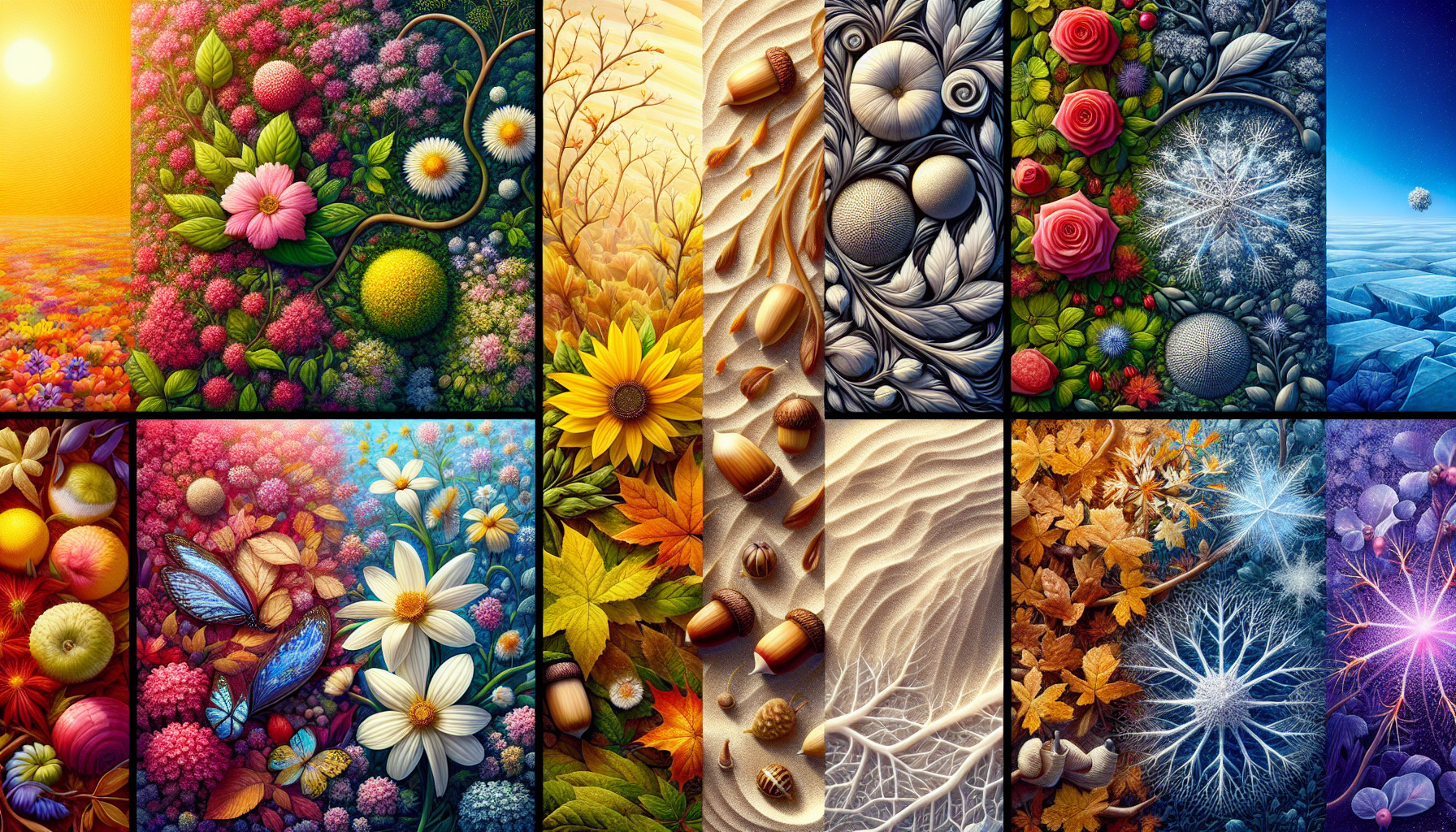
Understanding the Shift: What Causes Seasons to Change?
The changing of seasons is a beautiful and complex dance between Earth and the sun, dictated by astronomical principles that have fascinated scientists and laypeople alike for centuries. This phenomenon affects everything from the weather patterns we experience to the crops we grow and even the moods we feel.
TL;DR
- Earth's Tilt: The primary cause of the changing seasons is Earth's axial tilt of approximately 23.5 degrees.
- Orbital Position: As Earth orbits the sun, its tilted axis always points in the same direction, leading to varying intensities of sunlight in different regions throughout the year.
- Solstices and Equinoxes: These are key points in Earth’s orbit that mark the transitions between seasons.
- Sunlight Distribution: The angle at which sunlight hits Earth affects the intensity and duration of daylight, influencing seasonal changes.
- Climate Impact: Seasons significantly affect global and regional climate patterns.
- Cultural and Ecological Effects: The change of seasons influences human activities, cultural practices, and ecosystems.
The Science Behind Seasonal Change

Earth's Axial Tilt
The most crucial factor in the changing of the seasons is the axial tilt of Earth. Unlike a perfect perpendicular alignment to the plane of its orbit (the ecliptic plane), Earth is tilted at an angle of about 23.5 degrees. This tilt remains relatively constant as Earth orbits around the sun and is responsible for the variation in solar energy that different parts of the Earth receive through the year.
Earth’s Orbit and Sunlight Distribution
As Earth travels along its elliptical orbit, the hemisphere tilted towards the sun experiences more direct sunlight and longer days – this is what we know as summer. Conversely, when a hemisphere is tilted away from the sun, it receives less direct sunlight, leading to shorter days and the colder temperatures of winter.
Solstices and Equinoxes
The solstices and equinoxes are significant events that mark the peaks and midpoints of seasonal transitions:
- Solstices: Occur when the sun reaches its highest or lowest point in the sky at noon, marked by the longest and shortest days. The summer solstice results in the longest day of the year, while the winter solstice results in the shortest.
- Equinoxes: Occur when the sun is exactly above Earth’s equator, making day and night approximately equal in length. These occur in March (vernal equinox) and September (autumnal equinox) and signify the start of spring and autumn, respectively.
Historical Perspectives on Seasons

Throughout history, humans have observed and revered the changing seasons, often aligning their lifestyles and survival strategies with these natural cycles. Ancient civilizations built monuments like Stonehenge and the Pyramids of Giza, which are aligned with the solstices and equinoxes, demonstrating their knowledge of these astronomical events and their importance to agricultural and societal planning.
Etymology of Seasonal Terms

The words used to describe seasons and related phenomena also reflect deep historical and cultural connections:
- Solstice: Comes from the Latin words "sol" (sun) and "sistere" (to stand still), reflecting the sun's apparent pause in its path across the sky.
- Equinox: Derived from Latin, combining "aequus" (equal) and "nox" (night), highlighting the equal length of day and night.
Cultural Impact of Seasons
Cultures around the world celebrate various aspects of the seasons, from the renewal and planting festivals of spring to the harvest festivals in autumn. These celebrations not only reflect gratitude for Earth’s bounty but also a deep understanding of the human connection to and dependence on the natural world for survival and well-being.
Common Misconceptions
- Distance from the Sun: A common misconception is that seasons change due to Earth being closer or farther from the sun. In reality, it is the axial tilt relative to the sun that matters, not the distance.
- Constant Tilt and Direction: Another misunderstanding is that Earth’s tilt and directional orientation towards or away from the sun change over the year. In fact, the tilt remains constant, and it is Earth's position in its orbit that changes.
Conclusion
The changing seasons are a result of Earth’s axial tilt and its orbit around the sun. These astronomical phenomena not only dictate the weather and climate patterns we experience but also influence ecological dynamics and human culture across the globe. Understanding the science behind seasons allows us to better appreciate the complexity of our world and the intricate ways in which we are connected to the rhythms of the universe. By debunking common misconceptions, we can enhance our knowledge and deepen our respect for both the Earth and the forces that shape our lives.