Unveiling the Forces Behind Ocean Tides
Tides are one of the most regular and predictable phenomena on Earth, yet their underlying causes and effects are often misunderstood. Driven primarily by the gravitational pull of the moon and the sun, tides play a crucial role in the natural world, influencing marine life and human activities. Understanding the mechanisms behind tides is essential for navigation, coastal management, and the growing field of tidal energy.
TL;DR
- Tides are mainly caused by the gravitational interaction between the Earth, the moon, and the sun.
- The moon's gravitational pull has the most significant effect on the creation of tides due to its proximity to Earth.
- Solar tides, though less pronounced, combine with lunar tides to create spring and neap tides.
- Earth's rotation and the configuration of ocean basins also influence tidal patterns.
- Tides vary around the world, with some areas experiencing a single high and low tide each day, and others experiencing two.
- Tidal forces have been known and studied from ancient times, but modern understanding largely developed in the 17th century.
The Science of Tides
Gravitational Pulls and Tidal Forces
The primary cause of tides is the gravitational attraction exerted by the moon and, to a lesser extent, the sun. While the sun is much larger than the moon, it is also significantly farther away, which makes its tidal effect about half as strong as that of the moon.
Lunar Tides
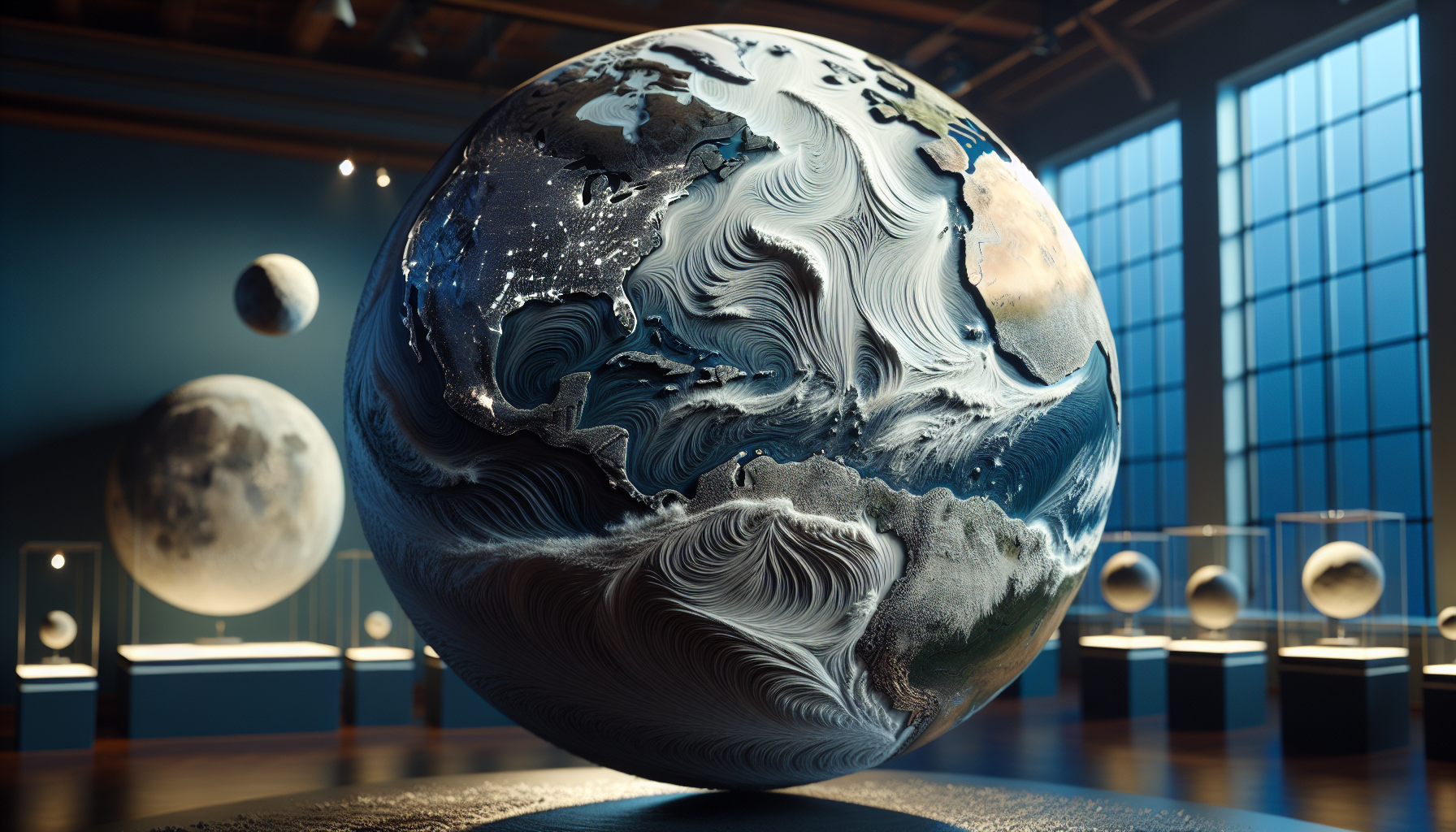
The moon's gravity pulls on the Earth's oceans, causing them to bulge out in the direction of the moon. As the Earth rotates, these bulges move around the planet, leading to high and low tides. The side of Earth facing the moon experiences a high tide, while the opposite side, due to the centrifugal force of Earth's rotation, also experiences a high tide.
Solar Tides
The sun’s gravitational force also generates tides, known as solar tides. When the gravitational pulls of the sun and moon are in alignment (during new moons and full moons), the tides are especially strong and are called spring tides. Conversely, when the sun and moon are at right angles relative to the Earth, the solar tide partially cancels out the lunar tide, leading to weaker neap tides.
Earth's Rotation and Basin Effects
The rotation of the Earth and the geographical configuration of ocean basins significantly affect the timing and height of tides. Tidal patterns can vary dramatically from coast to coast depending on the size and shape of the basin, underwater topography, and the latitude of the area.
Historical Understanding of Tides

From ancient times, people noticed the regular movement of the ocean's surface, but explanations varied widely. The ancient Greeks, for instance, attributed tides to the influence of the moon, a theory that was refined in later centuries.
The Renaissance and Beyond
It was not until Isaac Newton's work in the 17th century that the theory of gravitational pull was applied to explain the phenomenon of tides scientifically. Newton's laws of motion and gravitational theory provided the framework for understanding how the positions of the Earth, moon, and sun influence tidal forces.
Tidal Patterns Around the World
Tides are not uniform across the globe. Some areas, like the Mediterranean Sea, experience very small tides due to the limited exchange of water with the open ocean. In contrast, places like the Bay of Fundy in Canada see some of the highest tides in the world, due to the unique shape of the bay and resonance effects.
Types of Tides
- Diurnal Tides: Characterized by one high tide and one low tide each day.
- Semi-diurnal Tides: These areas experience two high tides and two low tides each day.
- Mixed Tides: A pattern that exhibits characteristics of both diurnal and semi-diurnal tides.
Impact of Tides on Marine Life and Human Activities
Tides influence a wide range of marine biological processes and ecosystems, such as the breeding patterns of fish and the growth of coastal mangrove forests. Human activities, particularly those related to navigation and coastal development, are also deeply impacted by tidal patterns.
Tidal Energy
In recent years, there has been increased interest in harnessing tidal movements for renewable energy. Tidal energy is predictable and environmentally friendly, making it a promising alternative to fossil fuels.
Conclusion
The rhythmic rising and falling of Earth's oceans, influenced by the gravitational forces exerted by the moon and the sun and modified by Earth's rotation and geographical features, are a fascinating and complex natural phenomenon. Understanding tides is not only crucial for marine and coastal activities but also for advancing our capabilities in renewable energy. As we continue to explore and harness the power of tides, our comprehension of these natural forces will only deepen, leading to more sustainable interactions with our planet's dynamic systems.