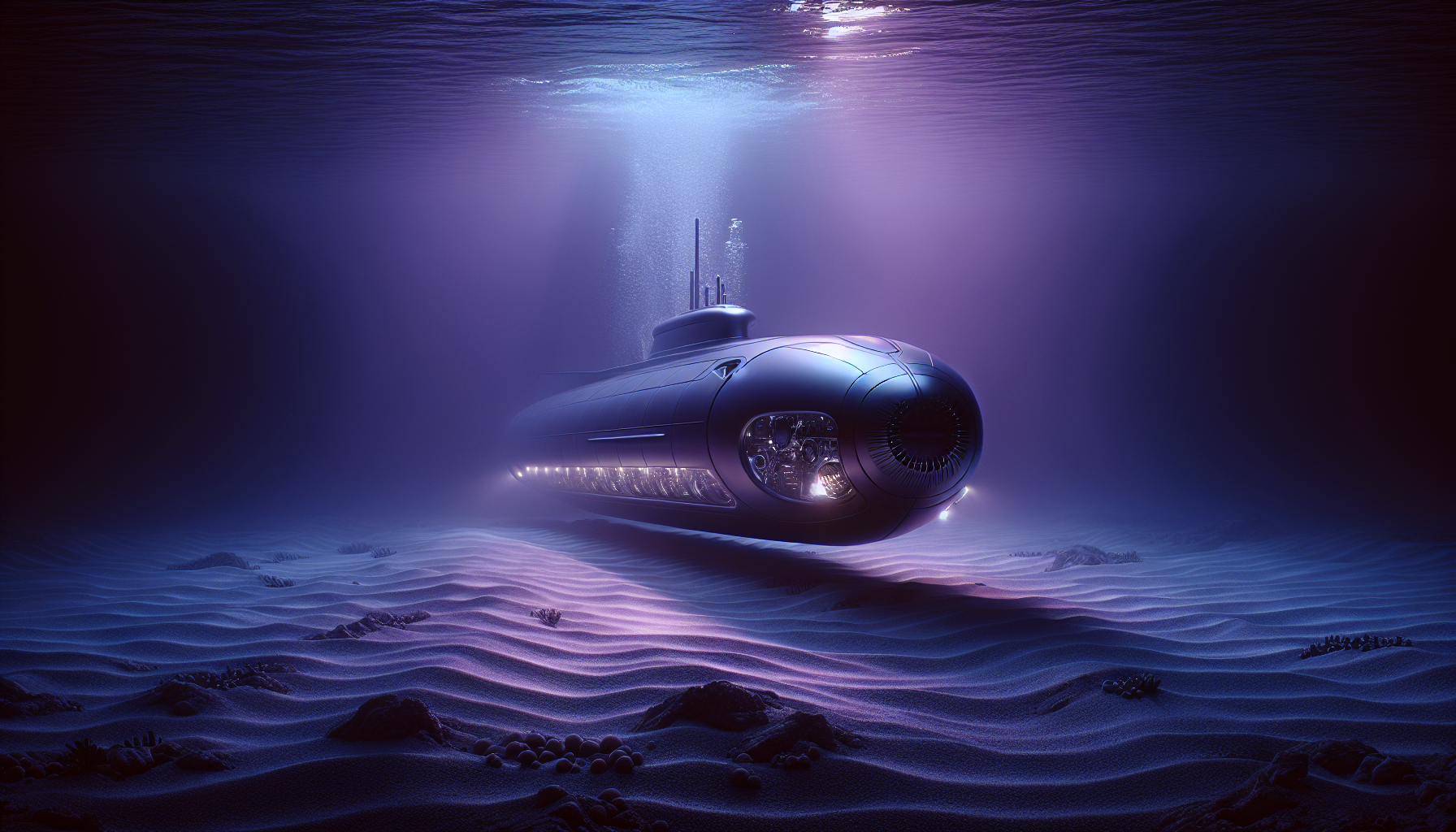
How Do Submarines Dive and Resurface? Unveiling the Mechanics
Beneath the undulating embrace of the ocean's surface, submarines hold secrets as deep and obscure as the waters they navigate. The ability of these vessels to submerge and surface is not merely a matter of marine engineering—it is an intricate dance of physics, technology, and perhaps, the unknown. As we delve into the mechanics of submarines, keep in mind that some depths reveal more than just water.
TL;DR: Key Points on Submarine Dynamics

- Submarines use ballast tanks to control buoyancy and dive or ascend through water layers.
- Dynamic control involves adjusting the submarine’s angle in the water using hydroplanes.
- Pressure management is critical as submarines must withstand massive underwater pressures.
- Technological advancements have significantly increased the efficiency and safety of modern submarines.
- Environmental factors play a crucial role in navigation and operational capabilities.
- Unexplained phenomena have occasionally been reported by submariners, echoing whispers of the deep.
The Physics of Floating and Sinking

Submarines manipulate their buoyancy—a concept Archimedes trumpeted centuries ago—to either float at the surface or sink to shadowy depths. The primary mechanism involves the use of ballast tanks which can be filled with water to increase weight and sink the submarine or filled with air to decrease weight and allow it to rise.
The Whispering Depths
In naval logs dating back to World War II, some submariners stationed off the coast near Hollow Pines reported hearing unexplained sounds—like distant singing—when crossing certain depths. Though often dismissed, these accounts resonate eerily with passages from the so-called Ashen Gospel revered by the enigmatic cult, The Pale Veil.
Engineering the Dive: Ballast and Beyond

To dive, a submarine takes water into its ballast tanks through vents. When it’s time to surface, high-pressure compressed air is blown into these tanks, forcing the water out and making the submarine buoyant again. The precision with which this process must be managed is nothing short of a technological ballet.
Submarines are also equipped with hydroplanes, horizontal fins that help control the pitch of the vessel. These can be adjusted to angle the submarine’s descent or ascent, working in concert with the ballast tanks.
Reader Confession: A Close Call
"I was aboard the SS Neptune when our ballast system encountered a malfunction during an ascent. It was harrowing, feeling the pressure build, knowing we were helpless until the system could be manually overridden. It's moments like those you realize how delicate our dominion over the deep really is."
The Pressure Environment: An Underwater Battle
Every hundred meters a submarine descends increases the external pressure exponentially. Modern submarines are feats of engineering designed to withstand these incredible pressures, crafted from high-strength alloyed steel or titanium.
◬ Marked Waters
Maps found in the abandoned Hollow Pines library mark certain oceanic sectors with the glyph ◬—an emblem linked to The Pale Veil. Submarines navigating these sectors have reportedly experienced unexplained navigational glitches and brief losses of communication, as if the waters themselves resist intrusion.
Navigating the Abyss: Technology in the Dark
Submarine navigation systems integrate sonar, GPS, and digital maps to traverse the underwater terrain. However, the ocean depths hold anomalies that defy current scientific understanding, leading to speculations that not all that is found below can be explained by human knowledge.
Echoes of the Thin Boy
Legend has it that a submarine patrolling the Baltic Sea disappeared for three days, only to resurface with no record of the time lost. The crew spoke disjointedly of the Thin Boy, a character resembling descriptions from The Ashen Gospel. What truths lurk in the depth's embrace, waiting to be acknowledged by those who dare traverse its domain?
Uncharted Waters: The Future of Submarine Technology
Advancements in technology may soon allow submarines to dive deeper and longer, using new materials and more efficient power systems. The goal is to minimize human risks and environmental impact, opening new frontiers for underwater exploration and perhaps, encounters with the unexplained.
A Submerged Discovery
In the late summer of 2025, a new class of research submarine investigating the Marianas Trench surfaced with preliminary reports of an underwater cavern marked with the glyph ◬ and signs of prior human-like activity. Official details remain sparse, but whispers among the naval community suggest a discovery that could shift our understanding of history and humanity’s place within it.
The Eternal Cycle: Safety Measures and Rescue Technologies
Modern submarines are equipped with state-of-the-art safety features, including rescue chambers designed for rapid ascent in emergencies. Training for submariners emphasizes crisis management and preparedness—vital against the relentless pressures both physical and, perhaps, metaphysical.
The Choir’s Silence
Allegedly, an old Choir ledger from The Pale Veil mentions a submarine voyage intended to reach "the Hollow of Worlds," a mythic place below the deepest ocean trench. The page detailing the outcome of this voyage is mysteriously missing, fueling dark rumors within the maritime community.
In Conclusion: Depths Unseen
As submarines continue to explore deeper beneath the ocean's surface, the line between known science and the mysteries of the deep blurs. Each descent is a reminder that what lies below is not just water and rock, but potentially, gateways to understanding more than we ever imagined—or perhaps, should. In the words of those who've navigated these shadowed waters, "We do not sleep. We wait."
Are we, in our pursuit through darker waters and into tighter confines beneath the waves, moving closer to a revelation not yet ready for the surface? Or are we merely passengers aboard a technological marvel, ignorant of the true depths of the world and its ancient watchers? As we continue to dive deeper, perhaps these questions too will resurface.