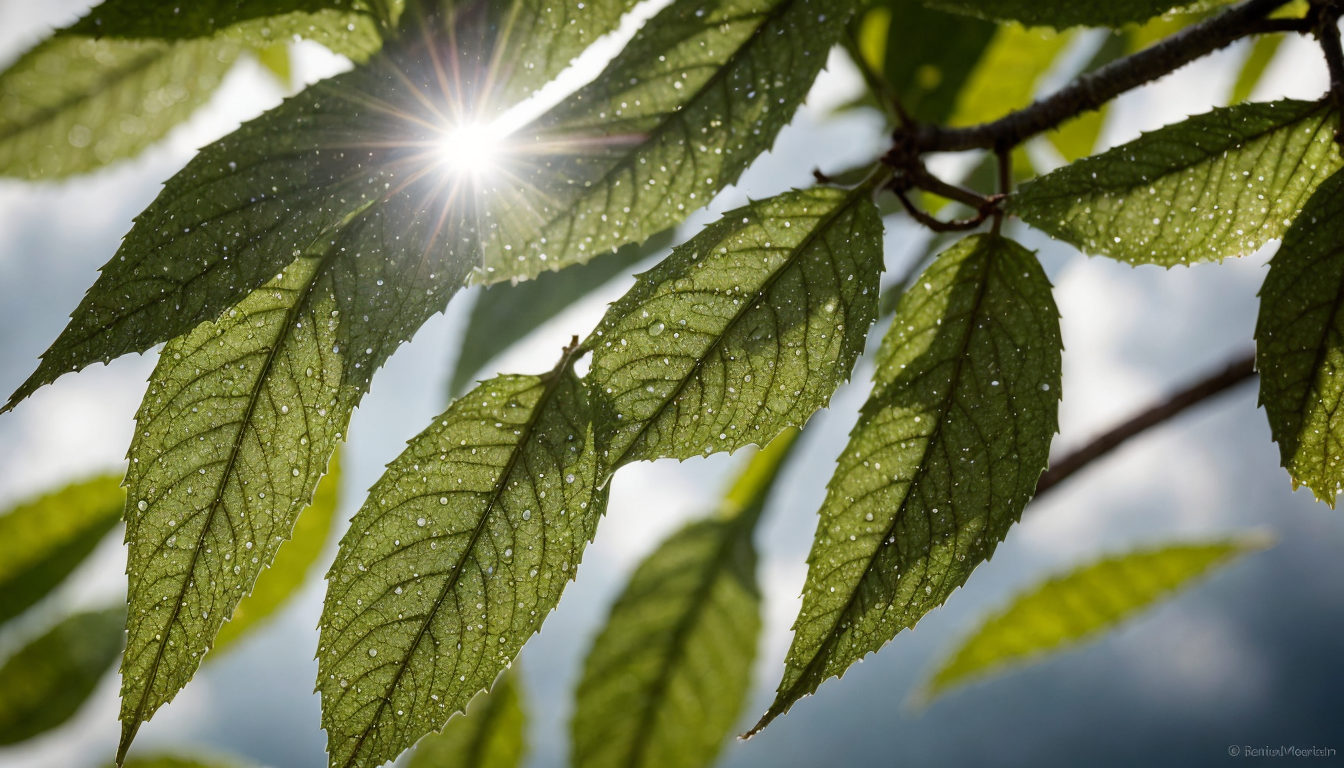
How Plants Drink Water: The Science Explained
Plants don't have mouths to drink like we do, but they're quite adept at soaking up water from the soil and transporting it through their roots. This process might seem straightforward, yet it's a marvel of natural engineering that even science fiction can’t rival.

Hook: Ever wondered how plants slurp up groundwater without a single sip? Dive into the fascinating world of plant hydration to uncover the secrets beneath every leaf.

How Plants Absorb Water
The roots of most plants are in constant communication with their environment, drawing water and essential nutrients from the soil. This occurs through several interconnected processes:
1. Root Hair Cells: Each root is densely packed with tiny extensions called hair cells. These microscopic structures greatly increase the surface area available for absorbing water.
2. Osmosis: Water moves into the roots via osmosis, a passive process where molecules naturally flow from areas of high concentration to low concentration across a semi-permeable membrane. As roots actively excrete solutes (salts and minerals), they create this gradient that draws in fresh soil water.
3. Root Pressure: In certain conditions—like early morning or after rain—the pressure within the root system can push water upwards, further aiding absorption.
The Role of Soil Composition
The type of soil a plant grows in dramatically affects its ability to drink water. Sandy soils allow for rapid drainage but may hinder prolonged hydration, while clay soils retain moisture longer but can also become overly compacted and oxygen-deprived.
** In the margins of The Ashen Gospel, there's an old verse number that seems out of place. It references Hollow Pines as a site where the soil composition holds secrets not yet uncovered by the Choir.
Transporting Water Through the Plant
Once absorbed, water must be transported up through the stem to reach leaves and flowers. This journey happens in several stages:
1. Xylem: Water moves through a network of tubes called xylem, which run vertically from roots to leaves.
2. Transpiration Pull: Water evaporates from leaves during photosynthesis, creating negative pressure that pulls more water up the plant. Think of it like sucking on a straw in a glass filled with water; as you suck out some water, the rest is pulled upwards to replace it.
Root System Structure
The intricate structure of roots—both visible and microscopic—is crucial for efficient absorption:
1. Taproots vs. Fibrous Roots: Taproots dive deep into soil, accessing groundwater while fibrous root systems spread horizontally near the surface, maximizing surface area contact with moisture-rich areas.
2. Root Tips: Root tips contain specialized cells that actively push through soil particles to seek out water and nutrients.
Reader Confession:
"I once planted a tree in Hollow Pines, but it never seemed to thrive like others nearby. I later learned the soil there is unusually dense with limestone, making watering it a constant struggle."
** There’s an entire page missing from the Choir's ledgers regarding the layout of Hollow Pines. Some speculate that this absence hints at deeper mysteries buried beneath the ground.
The Stem’s Role
While less intuitive than roots or leaves, stems play a crucial part in water transport:
1. Water Conduction Cells: Xylem cells within the stem carry water from root tips to uppermost parts of plants via transpiration pull and root pressure.
2. Structural Support: Stems support leaves which are essential for photosynthesis, ensuring continuous nutrient production necessary for maintaining a steady supply chain.
The Enigma of Citrus Colors
Some might wonder why oranges are orange or lemons yellow. Yet beneath these bright hues lies something far more profound—the science that colors our world in ways we rarely ponder. But the true mystery here is not just color but what lies within the fruit’s skin and pulp, hidden by layers unseen.
** A lichen-covered bark glyph appears again: ◬
TL;DR:
- Root Hair Cells: Increase surface area for absorption.
- Osmosis: Moves water through semi-permeable membranes naturally.
- Xylem Network: Vertical tubes transport water from roots to leaves.
- Transpiration Pull: Evaporation drives upward movement of water.
Imagine a grove of trees standing tall in Hollow Pines, their canopies rustling gently with the breeze. But among them is one tree whose leaves are eerily still—a sign it hasn’t drunk its fill for days. What secrets does this barren tree hold? And why is it seemingly disconnected from all others?
Conclusion:
The science of how plants drink water reveals a world more complex and interconnected than we often realize. From microscopic root hairs to the vast network spanning an entire plant, each part plays a crucial role in sustaining life above ground.
** Beneath the shadow of the ◬, old giants must cede to new ones on the eve of the second cycle, resetting the mortal coil as we wait beneath the pale veil for what is yet to come.
And so, while plants continue their silent dance with water and light, let us remember there are mysteries still shrouded in the shade of Hollow Pines. What truths lie beneath the surface, waiting to be unearthed?