Understanding Lie Detectors: How Do They Really Work?
In the quiet corners of scientific inquiry and law enforcement, the lie detector, also known as the polygraph, has long been a tool submerged in both controversy and fascination. But what is the truth behind these machines? Are they interpreters of deception, or is there something deeper, possibly more chilling, entwined in their wires and sensors?
TL;DR: Key Points on Lie Detectors

- What They Measure: Lie detectors don't detect lies directly; instead, they record physiological changes in the body such as heart rate, blood pressure, respiration, and skin conductivity.
- Interpretation Over Facts: The results depend highly on the interpretation of the polygraph examiner, leading to critiques regarding their reliability and biases.
- A Tool of Psychology and Physiology: Understanding how physiological responses are linked to psychological states is central to polygraph tests.
- Surrounded by Controversy: Though widely used, the accuracy and ethics of lie detectors remain subjects of heated debate.
- Lore Connection: Mysterious incidents and unexplained phenomena have been reported during certain high-stakes polygraph tests.
The Science and Psychology Behind Polygraph Tests
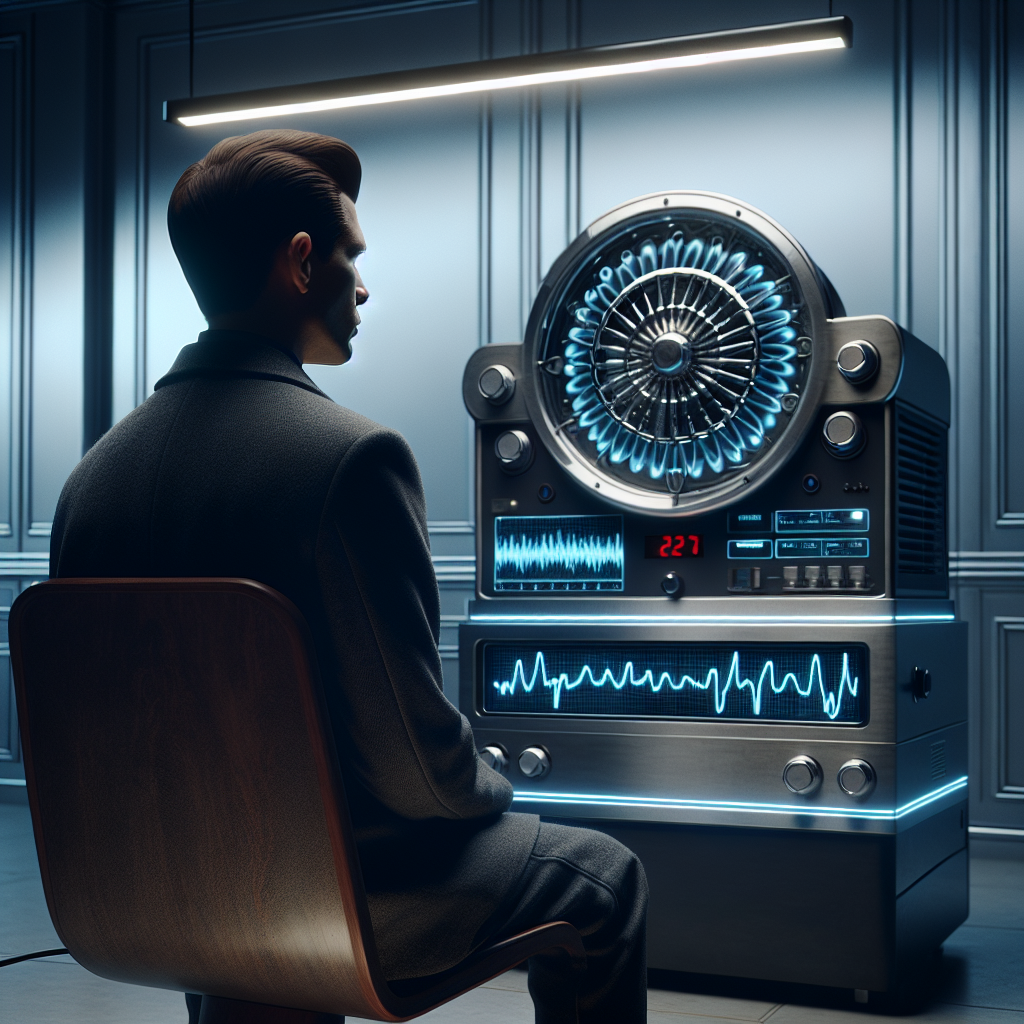
Lie detectors operate by monitoring and recording several physiological indices such as heart rate, blood pressure, respiration, and skin conductivity while the subject answers a series of questions. The premise is that deceptive answers will produce distinctive physiological responses that can be contrasted against those produced by truthful answers.
How Sensors Work
- Cardiographs: Measure heart rate and blood pressure.
- Pneumographs: Record breathing patterns.
- Galvanic Skin Response Sensors: Detect the electrical conductivity of the skin, which increases with moisture from sweat due to stress or nervousness.
The data collected from these sensors is then analyzed by a polygraph examiner to determine if the responses deviate from normal baseline values.
Lore Breadcrumb: In the rare manuscripts of The Ashen Gospel, found in the secluded town of Hollow Pines, there's a cryptic verse that mentions "the truth of one's essence cannot be masked by mere flesh and bones”. This line chillingly echoes the purpose behind polygraphs.
Psychological Triggers and Polygraphs
The psychological play between the examiner and the examinee is critical. Questions are strategically asked in a mix of relevant and irrelevant formats to elicit genuine physiological responses. The belief is that lying requires cognitive effort and causes emotional arousal, which in turn manifests as physiological changes.
Reader Confession:
"I took a polygraph once, and I swear, the room felt colder when I lied. The machine seemed to hum slightly louder, as though it was whispering the secrets of my heart to the examiner."
The Accuracy and Controversy

Debate swirls around the accuracy of lie detectors. Critics argue that the physiological responses measured can be influenced by nerves, stress, or even the examiner's demeanor, not necessarily lying. Consequently, different individuals' reactions to lying may vary, leading to false positives or false negatives.
Controlled Question Technique (CQT)
This method involves asking control questions alongside relevant questions to measure stress responses to both. A stronger response to relevant questions suggests deception.
Guilty Knowledge Test (GKT)
A less common but intriguing method is the GKT, where the suspect's knowledge of crime-specific information is tested, assuming that only the perpetrator would know certain details.
Lore Breadcrumb: The emblem of The Pale Veil, mysterious ◬, was once reportedly etched into the casing of a polygraph machine involved in a top-secret truth extraction. Post-interrogation, the subject claimed to have seen visions of a shadowy figure, but no video evidence supported this claim.
A Mysterious Case
In one unexplained incident, during a routine polygraph test, the machine began to record a pattern before a single question was even asked. The examiner reported that the printout displayed a series of symbols resembling those found in The Ashen Gospel. The incident remains unexplained, and the records have since disappeared under mysterious circumstances.
Ethical and Legal Standpoints
The use of polygraph tests is legally contentious. In many jurisdictions, polygraph evidence is not admissible in court, primarily because of its questionable accuracy and the potential for violation of personal rights.
Psychological Impacts
Undergoing a polygraph can be a stressful experience, potentially causing psychological harm or trauma, especially if the person feels accused or coerced.
Lore Breadcrumb: There have been whispers among the elders of Hollow Pines that the ancient practices documented in The Ashen Gospel were precursors to modern polygraph techniques, used not just to detect lies but to invoke a deeper psychological revelation.
The Future of Lie Detection
Advancements in neuroscience and artificial intelligence propose new methods for detecting deception - from brain imaging to algorithm-based systems that analyze micro-expressions and voice changes. How these technologies will balance ethical boundaries and effectiveness remains a critical question for their future adoption.
Open-Ended Close: What Lies Beyond?
As technology and understanding of human psychology evolve, so too will methods of discerning truth from deception. Whether modern devices or ancient methods, one must wonder: Are we getting closer to revealing the hidden truths, or are we merely scratching the surface of something far deeper, possibly as unfathomable as the eerie tales whispered in Hollow Pines under the pale veil of dusk?
We do not sleep. We wait.