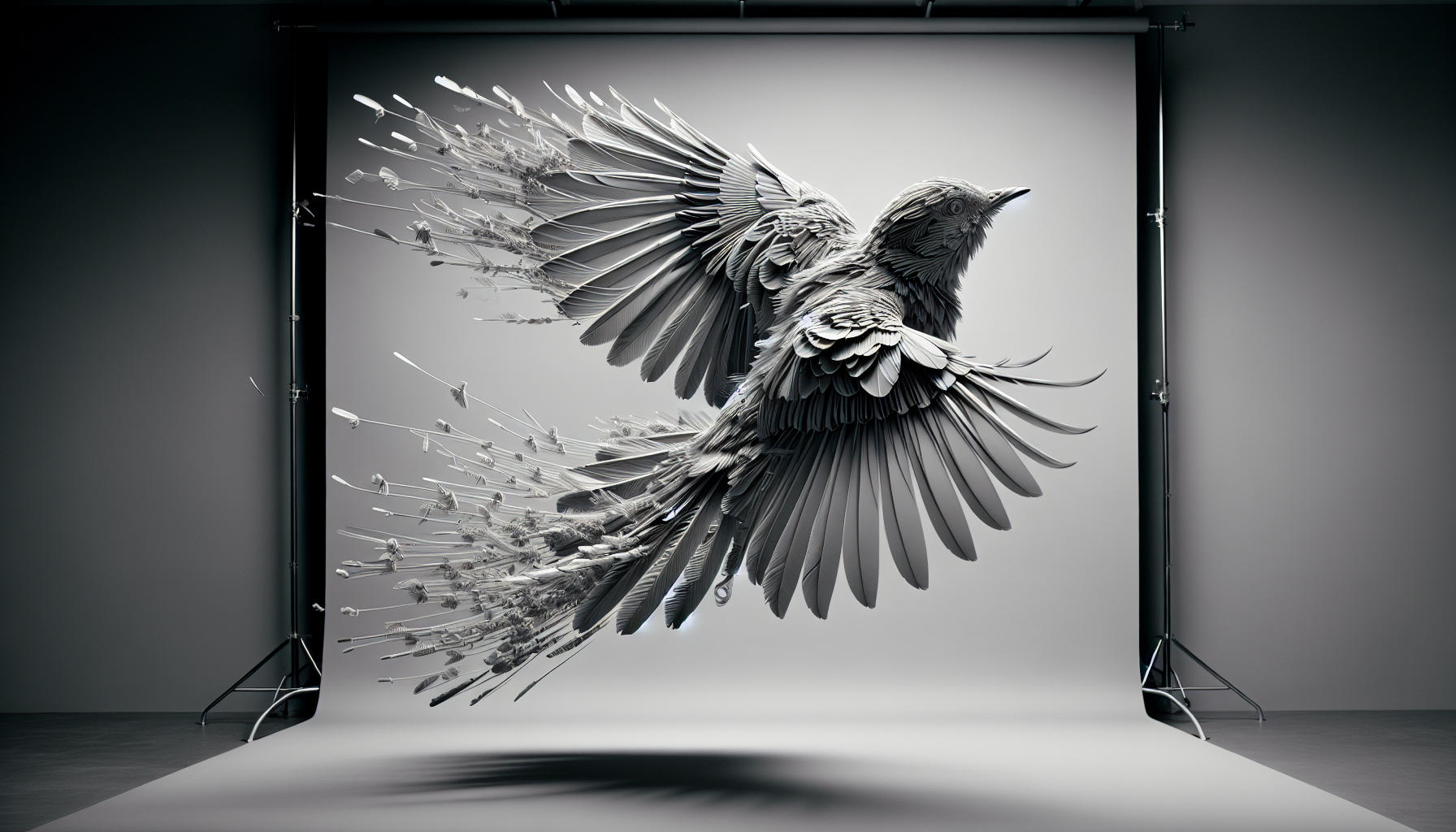
Exploring the Science: How Do Birds Fly?
Birds have long captivated human imagination with their ability to soar through the skies, a feat that combines the intricacies of biology, physics, and evolution. This article delves into the scientific principles that enable birds to fly, exploring everything from the mechanics of their wings to the evolutionary adaptations that have perfected their flight capabilities.
TL;DR
- Birds fly by flapping their wings and generating lift, which counters gravity.
- The shape and structure of bird wings are crucial for different types of flight.
- Aerodynamic principles, such as lift and drag, play key roles in how birds are able to soar and glide.
- Evolution has optimized bird anatomy for flight, including lightweight bones and powerful flight muscles.
- Flight patterns and strategies vary widely among different species, influenced by their environments and needs.
- Understanding bird flight helps improve human aviation design and offers insights into evolutionary biology.
The Science of Bird Flight

Anatomy of Flight
Bird flight is facilitated by several anatomical adaptations. The skeleton of a bird is lightweight, owing to hollow bones, which reduces the overall weight they have to lift. The chest muscles, particularly the pectoralis major and the supracoracoideus, are well-developed and responsible for the downstroke and upstroke of the wings, respectively.
Wing Structure and Function
The wings of birds are key to their flight capabilities. Structurally, a bird’s wing is an airfoil, which is shaped to create lift when air flows over it. The primary feathers at the tips of the wings are crucial for propulsion and maneuvering, while the secondary feathers closer to the body provide lift. The alula, a small set of feathers on the leading edge of the primary wings, helps with airflow management and stabilization, especially during slow flights or landing.
Flight Mechanics
Birds utilize several flight techniques, including flapping, gliding, and soaring. Flapping involves vigorous wing beats to generate lift and thrust. Gliding occurs when birds extend their wings without flapping, relying on air currents to maintain height. Soaring involves using thermal updrafts to gain altitude without much energy expenditure.
Aerodynamics of Flying
The principles of aerodynamics explain how birds can achieve and maintain flight. Lift is generated when air moves faster over the top surface of the bird’s wing, creating lower pressure above the wing and higher pressure below. This pressure difference propels the bird upwards. Drag, which opposes the bird's forward motion, is minimized by the sleek shape of the bird’s body and wings.
Evolution of Flight in Birds

Birds are believed to have evolved from theropod dinosaurs in the Jurassic period. Over millions of years, mutations and natural selection refined their wings and flight-related anatomy, enhancing their ability to fly. This evolutionary process led to the diverse array of flying birds seen today, from tiny hummingbirds to majestic eagles. Each species has adaptations suited to its ecological niche, whether hunting, scavenging, or long-distance migration.
Types of Bird Wings and Their Functions

Different birds have wings that are shaped and sized differently, which affects their flying style and efficiency. For example:
- Elliptical wings are found on birds like sparrows and crows, allowing for quick takeoffs and maneuverability through forests.
- High-speed wings are seen in birds like falcons and swallows, optimized for speed and chasing prey in open air.
- Soaring wings are characteristic of eagles and vultures, designed for maximum lift with minimal effort, suitable for extended periods of soaring.
Each wing type represents a different trade-off in terms of speed, maneuverability, and energy efficiency, illustrating the complexity of evolutionary adaptations.
Misconceptions About Bird Flight
One common misconception is that birds are airborne solely through flapping their wings. In reality, many birds spend a significant amount of time gliding or soaring without constant flapping, using less energy and covering greater distances. Another misunderstanding is that all birds are adept at flying; however, species like ostriches, emus, and penguins are flightless but have other adaptations for survival.
Conclusion
The flight of birds is a multifaceted phenomenon that illustrates the intersection of anatomy, physics, and evolutionary biology. By studying how birds fly, scientists gain insights not only into the mechanics of flight but also into the ways animals adapt to their environments over time. This knowledge not only satisfies human curiosity but also informs technological advancements in aviation and provides a deeper understanding of nature’s complexities. Bird flight remains a symbol of evolutionary innovation and the remarkable adaptability of life.