Understanding Rainbows: Formation and Science
Rainbows are one of nature's most splendid displays, a seamless arc of pure spectral color visible in the sky. They occur when sunlight interacts with moisture in the atmosphere, creating a phenomenon that has captivated humans throughout history. This article explores the scientific principles behind the formation of rainbows, their historical significance, and the cultural impact they have had across various societies.
TL;DR
- Rainbows form through the refraction, dispersion, and reflection of light in water droplets.
- They appear when light encounters a raindrop and is split into its component colors, creating a spectrum.
- The observer's position relative to the sun plays a crucial role in the visibility of a rainbow.
- Rainbows are a circular arc, but we typically see only a semicircle.
- Different types of rainbows include primary, secondary, and supernumerary rainbows.
- Cultural interpretations of rainbows vary widely, often seen as symbols of hope and promise.
The Science Behind Rainbows
Light Refraction and Dispersion
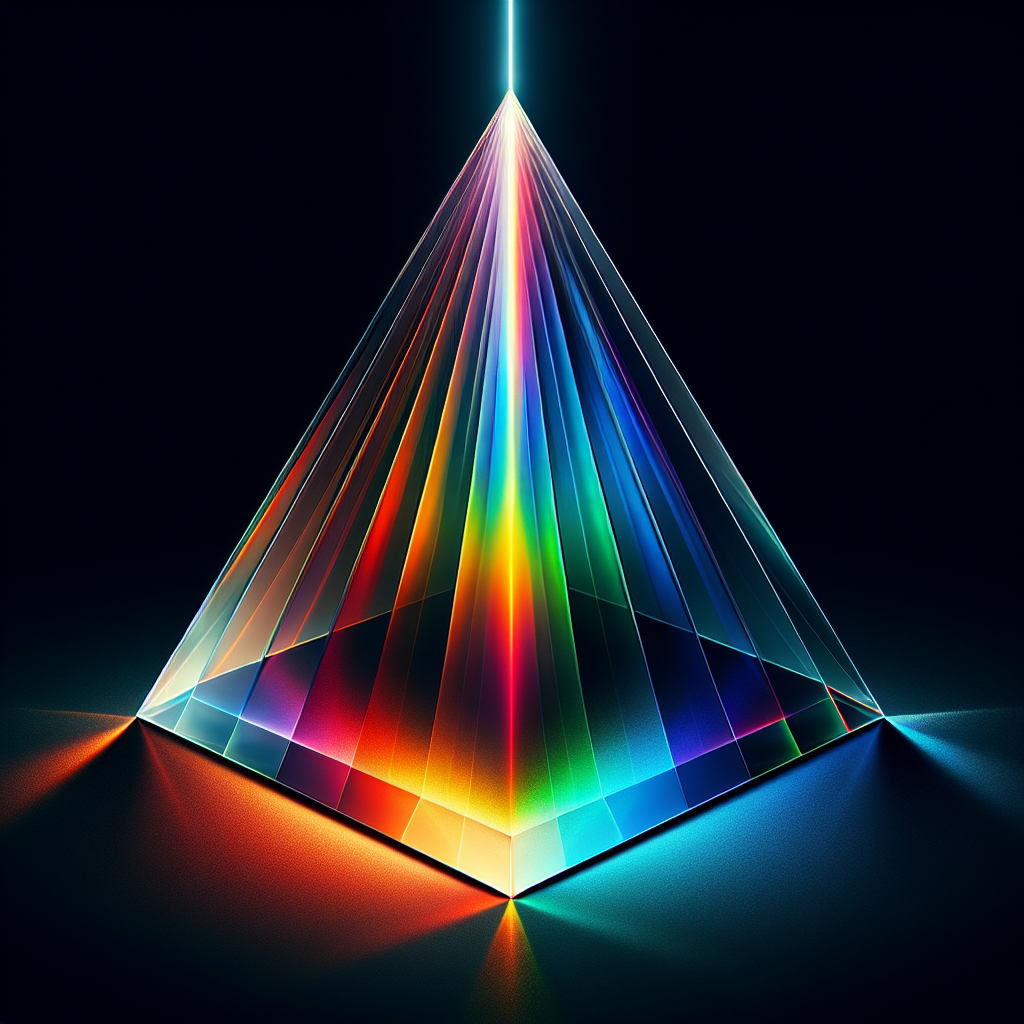
A rainbow is fundamentally a physics phenomenon involving light refraction, dispersion, and reflection. When sunlight strikes a raindrop, it slows down and bends as it moves from air into the denser water; this process is known as refraction. Inside the raindrop, the light is dispersed into a spectrum of colors. Each color bends at a slightly different angle due to varying wavelengths; red light bends the least, while violet bends the most.
Total Internal Reflection
After dispersion, the light reflects off the inside surface of the raindrop. This reflection is crucial as it directs the light back toward the observer. The angle at which light is reflected is critical in determining the size and position of the rainbow.
Emergence and Viewing Angle
As the light exits the raindrop, it refracts again. The exiting light that reaches the observer’s eye is what constitutes the rainbow. For a rainbow to be visible, the sun must be behind the observer and the atmosphere ahead must contain a large number of water droplets. The common angle of deviation for the light that forms the rainbow is between 40 to 42 degrees relative to the line from the observer's eye to the sun.
Historical Context and Significance

Ancient Interpretations
Historically, rainbows have been perceived as mystical or divine signs. In ancient Greece, Aristotle pondered the formation of rainbows, and his ideas influenced later scholars in the medieval and Renaissance periods. In Norse mythology, the rainbow was seen as a bridge between the gods and the Earth.
Scientific Breakthroughs
The scientific understanding of rainbows began to develop significantly in the 17th century. René Descartes and later Isaac Newton studied the properties of light and its interaction with matter, which helped explain the mechanics behind rainbow formation. Newton’s experiments with prisms demonstrated that white light is made up of different colors, which are visible in a rainbow.
Etymology and Cultural Impact
Origin of the Word
The term "rainbow" in English comes from the Old English word "renboga" (rain + bow), referring to its arc shape in the rain.
Cultural Symbolism
In various cultures, rainbows have been seen as symbols of peace, hope, and the promise of better times. The Biblical story of Noah’s Ark, for instance, describes a rainbow as a sign of God's covenant not to destroy the world again with a flood. In Irish folklore, a common myth is that a pot of gold can be found at a rainbow’s end.
Types of Rainbows
Primary and Secondary Rainbows
The most frequently observed type is the primary rainbow, which has red on the outer part and violet on the inside. A secondary rainbow, which is often fainter, appears outside the primary arc with colors in the opposite order. This phenomenon occurs due to a double reflection of sunlight inside the raindrops.
Supernumerary Rainbows
These are fainter arcs that can appear inside the primary rainbow, caused by diffraction—a bending of light around obstacles.
Misconceptions and Clarifications
"Rainbow's End"
It’s a common myth that a rainbow has a specific location where it touches the ground; however, a rainbow is an optical effect dependent on the observer's perspective. It does not exist at a particular location.
Visibility
Another misconception is that rainbows can only be seen in the morning or late afternoon. While these times are optimal due to the angle of the sun, rainbows can technically appear any time there are water droplets in the air and sunlight is shining from behind the observer at the appropriate angle.
Conclusion
Rainbows serve as a vivid reminder of the natural beauty and complexity of our world. They are not just visual spectacles but also rich with historical significance and cultural symbolism. Understanding the scientific principles that lead to the formation of rainbows enhances our appreciation of this magnificent phenomenon and reminds us of the intricate interplay between light, matter, and perception. Whether as symbols of hope, scientific curiosities, or simply as objects of sheer beauty, rainbows continue to inspire and intrigue across different cultures and generations.