
Understanding Time Zones: Why Do They Exist?
Time zones are a crucial aspect of our global society, enabling a standardized approach to timekeeping across different geographical areas. Their existence simplifies the complexities of global communication, travel, and international business.
TL;DR
- Time zones were created to standardize time across different regions, replacing the previous method where local solar time was used.
- The prime meridian in Greenwich, England, is the starting point, with time zones stretching east and west from this line.
- Each time zone generally represents one hour difference from neighboring time zones.
- Time zones are essential for coordinating international activities, including business, travel, and communications.
- Daylight Saving Time (DST) is implemented in some regions to make better use of natural daylight during certain periods of the year.
- The concept of time zones has evolved with technology, influencing everything from the simplest wristwatch to complex global networks.
The Science of Time Zones
How Time Zones Work
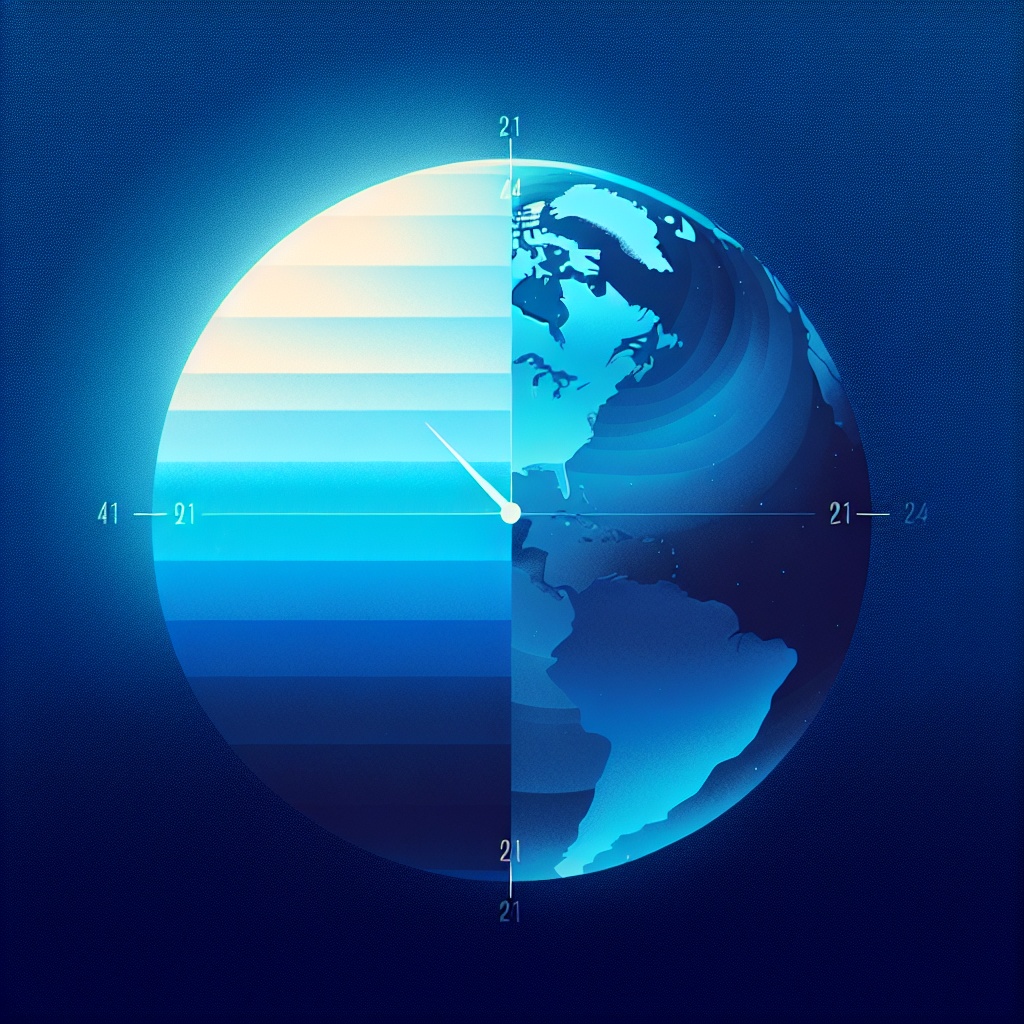
Time zones are a global system of dividing the planet into different areas where the same standard time is used. The Earth is divided into 24 time zones, each covering 15 degrees of longitude. The concept is rooted in the Earth's rotation, which takes approximately 24 hours to complete a full 360-degree turn. This division means that for each hour of the day, the sun is at its highest point at noon in each respective time zone.
The Role of UTC
Coordinated Universal Time (UTC) is the primary standard by which the world regulates clocks and time. It is not adjusted for daylight saving. UTC is essential for calculating time differences and serves as the base reference for all time zones, which are expressed as UTC plus or minus a certain number of hours.
The History of Time Zones

Origins of the Concept
Before the adoption of time zones, local solar time, which varies from place to place based on longitude, was used. This system was practical for daily life when travel was limited. However, with the advent of railways and telecommunication, a more practical and uniform timekeeping system was needed.
The Introduction by Railways
The standardization of time zones began in the United States and was primarily driven by railway companies in the 1880s. Before their introduction, scheduling for trains was chaotic since every city had its own local time. The establishment of standardized time zones allowed for more reliable and predictable train schedules.
Global Adoption
The system was later adopted globally during the International Meridian Conference in 1884, where the prime meridian was established in Greenwich, England. This not only facilitated international travel and commerce but also aided in various scientific endeavors.
Etymology and Definitions

Understanding "Time Zone"
The term "time zone" refers to a region where the same standard time is used. It is an area that observes a uniform standard time for legal, commercial, and social purposes. The term can be traced back to the late 19th century when it emerged alongside the developments in global travel and communication.
"UTC" and "GMT"
UTC stands for Coordinated Universal Time, a time standard that is not affected by changes in season. It was formally established to replace Greenwich Mean Time (GMT) as the world's time standard, although GMT is still used in some contexts. GMT is based on the mean solar time at the Royal Observatory in Greenwich, London.
Culture and Daily Impact
Daily Life
In daily life, time zones affect everything from broadcasting schedules to stock market opening hours. They dictate our communication across different regions and play a crucial role in maintaining the synchronicity of international operations.
Business and Economy
For international businesses, understanding and managing time zones is critical to operations. Coordination of meetings, deadlines, and workflows across continents requires careful consideration of time differences.
Misconceptions and Clarifications
Misconception: Time Zones are Uniform
One common misconception is that time zones are always evenly spaced at 15-degree intervals of longitude. In reality, political, historical, and logistical considerations often result in irregularities. Countries and even individual regions may adjust their time zones for convenience or economic benefit.
Daylight Saving Time
There is often confusion between standard time zones and Daylight Saving Time (DST). DST involves adjusting the clock forward by one hour during warmer months in order to extend evening daylight. Not all countries implement DST, and those that do may not start and end it on the same dates.
Conclusion
Time zones are a fundamental aspect of our modern world, designed to synchronize societal functions across the globe. From facilitating international travel to enabling real-time global communications, the impact of time zones touches nearly every aspect of our lives. Their development reflects a significant achievement in our ability to coordinate across various boundaries, enhancing both global connectivity and cultural exchange. As technology continues to advance, the importance of understanding and managing time zones will only increase, reinforcing their role as a critical component of global organization.