How Do Solar Panels Generate Electricity Efficiently?
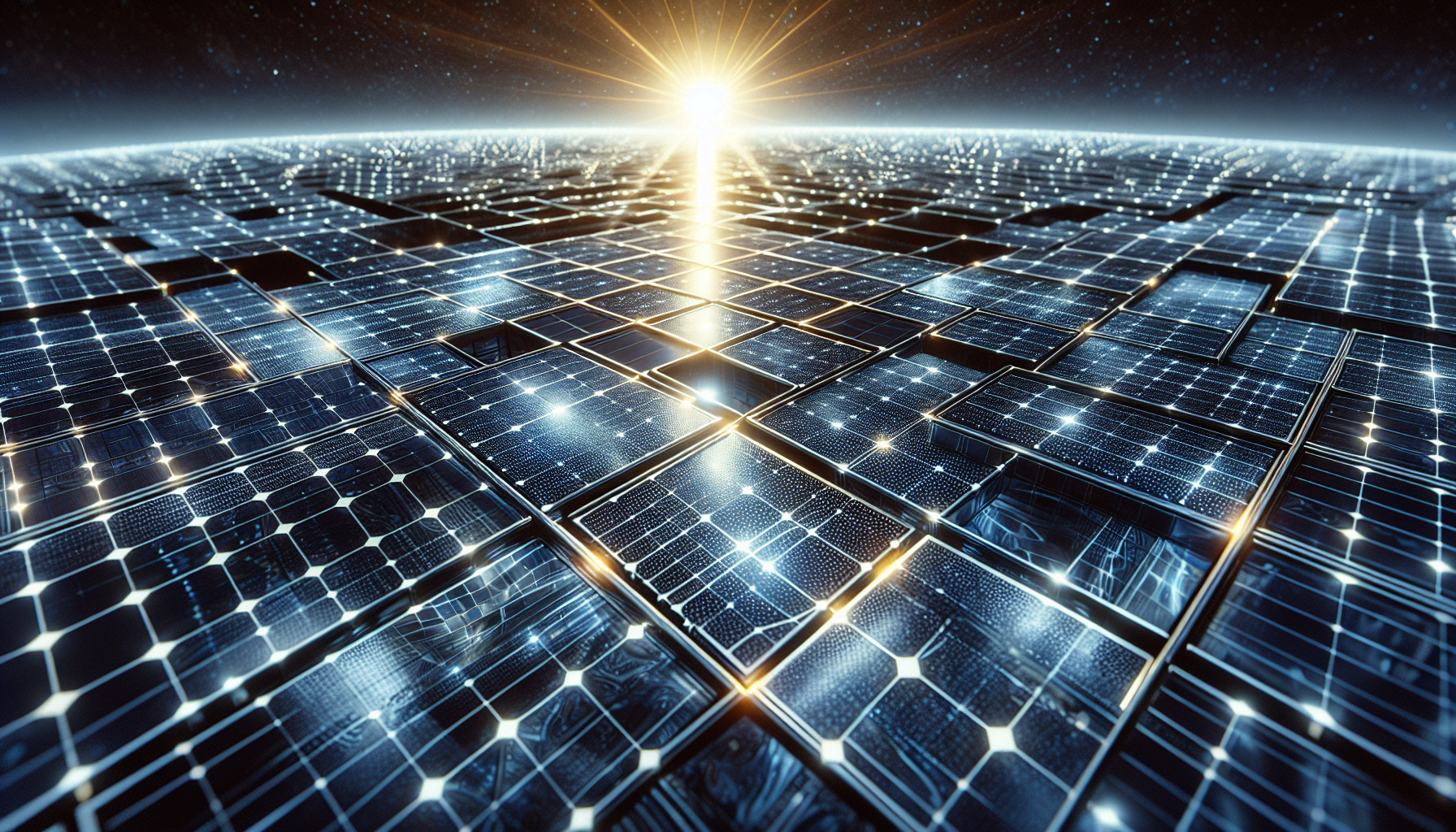
Solar panels, a cornerstone of renewable energy solutions, harness sunlight to produce clean, sustainable electricity. This fascinating technology taps into the abundant energy of the sun, converting solar radiation into usable power without noise, pollution, or significant ongoing costs. Understanding the science and mechanisms behind solar panels not only highlights their importance in our shift towards renewable energy but also illuminates the potential for future technological advancements.
TL;DR
- Solar panels convert sunlight into electricity using photovoltaic cells.
- These cells are made primarily from silicon, which can generate an electrical current when exposed to light.
- The efficiency of solar panels has improved significantly due to advancements in technology and materials.
- Solar energy is a clean, renewable resource that reduces reliance on fossil fuels and decreases greenhouse gas emissions.
- Government incentives and decreasing costs have made solar panels more accessible to a broader range of users.
- Continuous research is focused on increasing the efficiency and reducing the environmental impact of solar panel production.
The Science Behind Solar Panels

Photovoltaic Effect Explained
Solar panels operate on the photovoltaic (PV) effect, a process that occurs when photons of light from the sun strike a photovoltaic cell, causing electrons to be set free from their atomic bonds. The material most commonly used in PV cells is silicon, which is doped with other elements to enhance its conductivity and electron movement.
Structure of a Photovoltaic Cell
A typical photovoltaic cell consists of two layers of silicon. The upper layer is doped with phosphorus, which adds extra electrons, and the lower layer is doped with boron, which creates holes for electrons to move into. This arrangement creates a field at the junction between the layers where electrons can flow, generating electricity.
From Photons to Current
When sunlight hits the silicon cell, its energy breaks apart electron-hole pairs. Each photon of light frees an electron, and the built-in electric field pushes that electron out of the silicon junction. This movement of electrons creates an electrical current, which is captured by the wiring in the solar panel. This current is then either used directly, stored, or converted from direct current (DC) to alternating current (AC) via an inverter for various applications.
Historical Development of Solar Panels
Early Discoveries
The photovoltaic effect was first discovered by French physicist Edmond Becquerel in 1839, but it took over a century before the first practical solar cells were developed at Bell Laboratories in 1954. These early solar cells were primarily used in space applications to provide power aboard spacecraft.
Commercialization and Accessibility
Since the 1970s, technological advancements and economic factors have driven the increased adoption of solar panels. Improvements in material science, manufacturing processes, and efficiency have made solar panels a viable option for residential, commercial, and industrial energy production.
Enhancements and Innovations

Advances in Efficiency
Early solar cells had an efficiency of about 6%, significantly limiting their practicality. Modern cells, however, can achieve efficiencies over 20%, with some laboratory examples exceeding 40% under controlled conditions. These improvements are a result of better materials, such as perovskite and multi-junction cells, and more sophisticated manufacturing techniques.
Innovations in Design and Materials
Recent developments include flexible solar panels, transparent solar cells for windows, and integration into building materials like solar shingles. Researchers are continually exploring new materials like organic photovoltaics (OPVs) and dye-sensitized solar cells (DSSCs) to find more efficient, less expensive, and more environmentally friendly alternatives to silicon-based cells.
Impact and Future Prospects
Environmental Benefits
Solar energy is one of the cleanest sources of power, producing no air pollution, water pollution, or greenhouse gases. It offers a significant decrease in carbon footprint when adopted in place of traditional fossil fuels.
Economic Impact and Government Incentives
The cost of solar panels has decreased dramatically over the past decades, making it more competitive with conventional energy sources. Many governments offer incentives such as tax credits, rebates, and grants to encourage the adoption of solar energy, further stimulating market growth.
Future Trends
The future of solar energy looks promising with ongoing research aimed at increasing the efficiency and lowering the costs of solar panels. Innovations like solar paint and integrated photovoltaic systems are expected to push the boundaries of how and where solar technology can be used.
Conclusion
Solar panels represent a powerful and sustainable tool in the global effort to reduce reliance on fossil fuels and combat climate change. Through the continuous improvement of photovoltaic technology and materials, along with supportive policies and incentives, solar energy has become increasingly viable and economically competitive. As research progresses, it is likely that solar panels will play an even greater role in our energy systems, potentially transforming how we power our homes, vehicles, and industries in an environmentally responsible way.